, to see if you have full access to this publication.
Edited Book No access
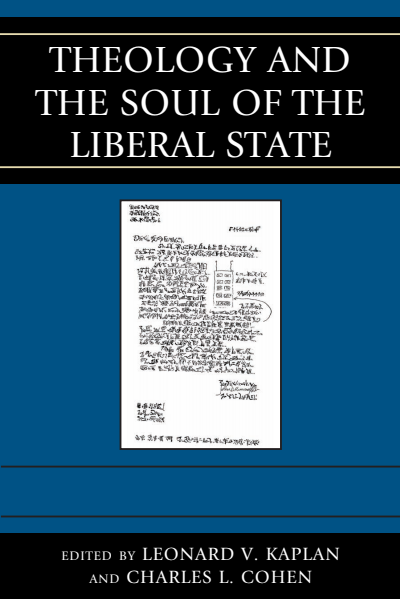
Theology and the Soul of the Liberal State
Editors:
|
Publisher:
2009
Summary
Rising calls in both the United States and abroad for theologizing national agendas have renewed examinations about whether liberal states can accommodate such programs without either endangering citizens' rights or trivializing religious concerns. Conventional wisdom suggests that theology is necessarily unfriendly to the liberal state, but neither philosophical analysis nor empirical argument has convincingly established that conclusion. Examining the problem from a variety of perspectives including law, philosophy, history, political theory, and religious studies, the essays in Theology and the Soul of the Liberal State suggest the possibilities for and limits on what theological reflection might contribute to liberal polities across the globe. Theology and the Soul of the Liberal State develops these issues under five headings. Part One explores 'The Nature of Religious Argument' as it can inflect discussions of public policy, political theory, jurisprudence, and education. Part Two, 'Theologies of the Marketplace,' notes that theology can by turns be highly critical, neutral, or even inordinately supportive of market operations. Part Three, 'European Perspectives,' reviews and develops arguments from Abraham Kuyper, Karl Barth, and French post-modernists concerning how one might integrate theological discourse into the public sphere. Part Four offers Israel, Pakistan and Tibet as 'Asian Perspectives' on how theology may comport with liberalism in recently created states (or, in the last case, a diasporic government-in-exile) where powerful religious constituencies make 'secular' civil action extremely problematic. Finally, Part V, 'Religion and Terror,' probes the vexed relationship between conceptions of divine and human justice, where the imperatives of theology and state confront each other most nakedly. Collectively, Theology and the Soul of the Liberal State suggests that the liberal state cannot keep theology out of public discourse and may even benefit from its intervention, but that their intersection, if potentially beneficial, is always fraught.
Search publication
Bibliographic data
Edition
1/2009
Copyright Year
2009
ISBN-Print
978-0-7391-2618-9
ISBN-Online
978-0-7391-4431-2
Publisher
Lexington, Lanham
Language
English
Pages
394
Product Type
Edited Book
Table of contents
ChapterPages
Contents No access
Acknowledgments No access
Introduction No access Pages 1 - 22
Chapter 01: Naked in the Public Square: Depth of Commitment in the Liberal State Today No access
Chapter 02: Social Contract in Modern Jewish Thought: A Theological Critique No access
Chapter 03: Justices Story and Holmes in the Realm of the “Brooding Omnipresence” No access
Chapter 04: Theology, Society, and the Vocation of the University No access
Chapter 05: St. Augustine, Markets, and the Liberal Polity No access
Chapter 06: When Markets and Gambling Converge No access
Chapter 07: A Theological Case for the Liberal Democratic State No access
Chapter 08: Preserving the Natural: Karl Barth, The Barmen Declaration: Article 5, and Dietrich Bonhoeffer’s Ethics No access
Chapter 09: Materialism and Transcendence No access
Chapter 10: A Jewish and Democratic State: A Normative Perspective No access
Chapter 11: In the Shadows of Modernity? Theology and Sovereignty in South Asian Islam No access
Chapter 12: A Constitutional Analysis of the Secularization of the Tibetan Diaspora: The Role of the Dalai Lama No access
Chapter 13: Grave Images: Terror and Justice No access
Chapter 14: Compassion, Knowledge, and Power: A Tibetan Approach to Politics and Religion No access
Conclusion No access Pages 363 - 378
Index No access Pages 379 - 390
About the Contributors No access Pages 391 - 394
Similar publications
from the topics "Religion und Theologie allgemein"