, to see if you have full access to this publication.
Monograph No access
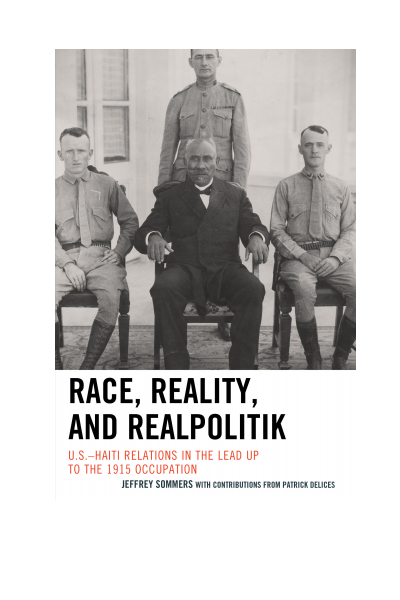
Race, Reality, and Realpolitik
U.S.–Haiti Relations in the Lead Up to the 1915 Occupation
Authors:
Publisher:
2015
Summary
The year 2015 marked the centennial of the 1915 United States occupation of Haiti and Haiti’s resistance to that signal event in its history. This study surveys the issues of economics, race, and realpolitik embedded in the political economy of U.S. interactions with Haiti that resulted in occupation. It then interrogates what constitutes the “state” as it pertains to foreign policy, along with an inspection of who benefits from empire. This approach eschews tired dichotomies of whether or not the United States as a whole materially benefited from empire to instead simply look at who individually gained and what were the capacities of these beneficiaries to craft policy. Next it delivers insights derived from a forensic analysis of Woodrow Wilson’s perception of race and his decision to intervene in Haiti. Attitudes enabling United States military leaders to implement a policy of occupation are provided through a study of Admiral William Caperton’s role in the intervention. The focus then telescopes out to inspect the role played by the press, especially as booster for commercial opportunities. In short, the project answers the questions of why, who, and how American empire was undertaken through the case study of Haiti and its occupation in 1915.
Keywords
Search publication
Bibliographic data
Edition
1/2015
Copyright Year
2015
ISBN-Print
978-1-4985-0914-5
ISBN-Online
978-1-4985-0915-2
Publisher
Lexington, Lanham
Language
English
Pages
141
Product Type
Monograph
Table of contents
ChapterPages
Contents No access
Preface No access
Acknowledgments No access
Introduction No access Pages 1 - 16
Chapter One: Perceptions of Haiti No access Pages 17 - 32
Chapter Two: Marketing Uplift and Empire No access Pages 33 - 54
Chapter Three: Hemispheric Imperative to Invest No access Pages 55 - 78
Chapter Four: “Shame and Evil” in Haiti No access Pages 79 - 94
Chapter Five: Woodrow Wilson and Haiti No access Pages 95 - 112