, to see if you have full access to this publication.
Monograph No access
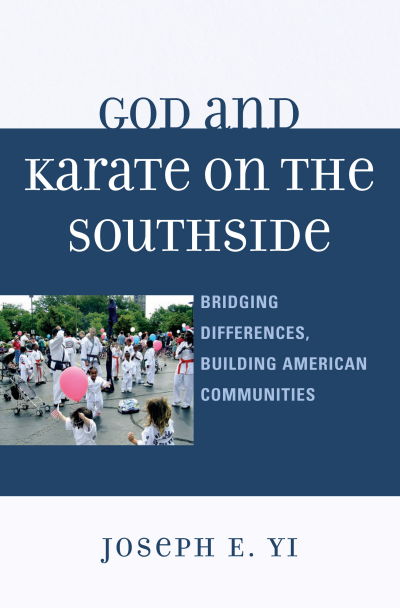
God and Karate on the Southside
Bridging Differences, Building American Communities
Authors:
Publisher:
2009
Summary
Recent demographic changes have sparked debate about the civic health of American democracy. Democracy requires people of different backgrounds to be disposed toward working together, and it requires 'little-noticed meeting places' where neighbors interact with each other, share their thinking, and address common problems. As issues of ethnic and social diversity become increasingly foregrounded, social scientists find pervasive social distrust and civic withdrawal in racially and ethnically heterogeneous communities, whether in big cities (Los Angeles) or small (Yakima, WA). In this book, Yi argues that increasing diversity can revitalize social and civic connectedness if our institutions rise up to the challenge of finding common ground and shared enterprise for people of different backgrounds. He highlights two types of organizational actors in the USA. One type renews and adapts longstanding religious, cultural, and civic traditions to a dynamic, multiethnic society. The second type attempts to introduce Americans to the many religious and cultural traditions from outside the United States. These tendencies point to a dynamic, 'many-stranded' model of liberal-plural democracy, which fosters and benefits from a variety of group affiliations and types of engagement. Organizations that combine internal, authoritative community with external, plural outreach, such as some evangelical mega-churches and karate schools, connect people across racial and economic divides. In these bridging organizations, people find a sense of unity among diversity; they get to know each other as individuals, rather than as representatives of disliked groups. Using fieldwork on churches, karate schools, and other organizations in a racially mixed, Chicago Southside neighborhood as well as a broader analysis of race and religion in the 1972D1998 General Social Survey, Yi combines classical democratic theory with compelling personal stories and rigorous empirical analysis. God and Karate in the Southside is the first book to analyze the intersection between race, religion, and martial arts in the United States. It is a mustDread for scholars interested in issues of community diversity and civic democracy.
Search publication
Bibliographic data
Edition
1/2009
Copyright Year
2009
ISBN-Print
978-0-7391-1406-3
ISBN-Online
978-0-7391-3837-3
Publisher
Lexington, Lanham
Language
English
Pages
222
Product Type
Monograph
Table of contents
ChapterPages
Contents No access
Acknowledgments No access
Chapter 01. Introduction No access
Chapter 02. The Nature of the Problem: Diversity and Indifference No access
Chapter 03. Many-Stranded Theory of Liberal Democracy No access
Chapter 04. God Bridging: Chicago (International) Church of Christ No access
Chapter 05. Framing Religion: Limits of Christian Engagement No access
Chapter 06. Karate Bridging: Fitzpatrick’s Tang Soo Do No access
Chapter 07. Framing Karate: Frontiers of Engagement No access
Chapter 08. Religious Participation and Race Relations: General Social Survey No access
Chapter 09. Renewing Democracy in America No access
Appendix A: Methodology No access Pages 185 - 192
Appendix B: General Social Survey No access Pages 193 - 214