, to see if you have full access to this publication.
Monograph No access
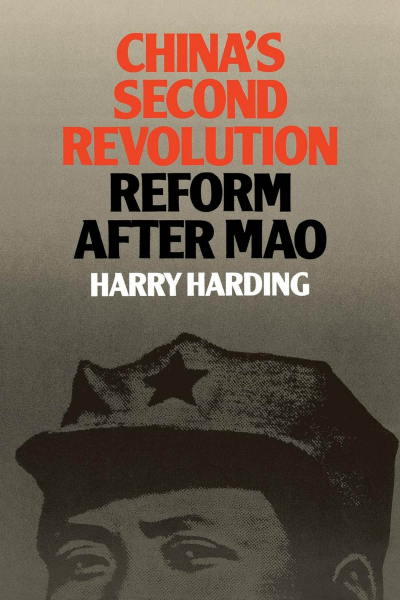
China's Second Revolution
Reform after Mao
Authors:
Publisher:
2010
Summary
China has, since 1976, been enmeshed in an extraordinary program of renewal and reform. The obvious changesthe T-shirts, blue jeans, makeup and jewelry worn by Chinese youth; the disco music blaring from radios and loudspeakers on Chinese streets; the television antennas mushrooming from both urban apartment complexes and suburban peasant housing; the bustling free markets selling meat, vegetables and clothing in China's major citiesreflect a fundamental shift in the government's policy toward the economy and political life.
Although doubts about the long-term commitment to reform arose after the student protests in December 1986 and the dismissal of Party General Secretary Hu Yaobang in January 1987, the scope of reform has been so broad and the pace of change so rapid, that the post-Mao era fully warrants Den Xiaoping's description of it as the "second revolution" undertaken by the Chinese Communist Party.
Search publication
Bibliographic data
Edition
1/2010
Copyright Year
2010
ISBN-Print
978-0-8157-3462-8
ISBN-Online
978-0-8157-0728-8
Publisher
Rowman & Littlefield, Lanham
Language
English
Pages
369
Product Type
Monograph
Table of contents
ChapterPages
CONTENTS No access
1. Overview No access Pages 1 - 8
The Economic Legacy No access
The Tradition of Foreign Economic Relations No access
The Political Heritage No access
A Balance Sheet No access
The Pressures for Reform No access
The Chinese Political Spectrum in 1976 No access
The Evolution of the Political Spectrum since the Death of Mao No access
Conclusion No access
A Chronology of Reform No access
The Division between Moderate and Radical Reformers No access
The Politics of Reform No access
Conclusion No access
The Moderate Economic Reforms No access
The Radical Economic Reforms No access
Conclusion No access
The Decentralization and Expansion of Trade No access
Trade Imbalances and China's Use of Foreign Credit No access
Technological Exchange No access
Foreign Investment in China No access
Special Economic Zones and Open Cities No access
Conclusion No access
The Moderate Political Reforms No access
The Limits to the Moderate Political Reforms No access
Proposals for Radical Reform No access
The Controversy over Radical Political Reforms No access
Conclusion No access
Reforming the Political Process No access
Redefining Organizational Roles and Relationships No access