, to see if you have full access to this publication.
Monograph No access
John Banville
Authors:
Publisher:
2018
Summary
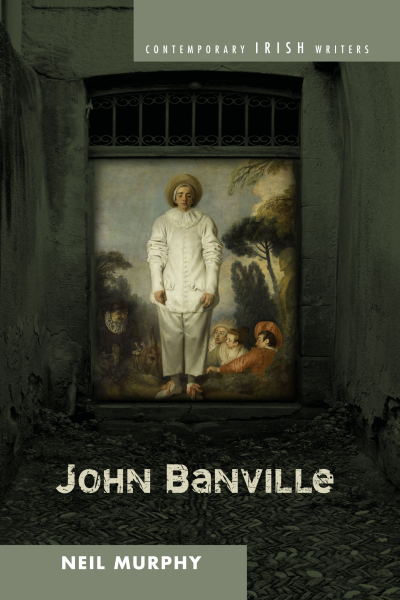
John Banville offers a close analysis of most of Banville’s major novels, as well as the ‘Quirke’ crime novels he has written under the pseudonym, Benjamin Black and his dramatic adaptations of Heinrich von Kleist’s plays. From the beginning, Banville’s work has been marked both by the presence of a complex, embedded discourse about the significance of art and by a concurrent self-conscious obsession with its own status as art. His novels perpetually reveal an overt fascination with the visual arts, in particular, and with the aesthetic principle of literature as art. This study argues that, as a whole, Banville’s work presents an elaborate and richly-textured coded account of his relationship with art and with the self-referential fictional world that his novels have conjured. It is from this critical context that John Banville’s central argument is derived. This book asserts that Banville’s fiction can be viewed both as an extended interrogation into the meaning and status of art as well as itself being a representative of the type of art that is admired in the pages of the novels. As such, it also represents an extremely sophisticated enactment of the novel form that goes beyond the “self-reflexivity” of late twentieth-century fiction to chart new developments in the literary arts. The book’s critical process involves several specific reference points. Firstly, Banville’s own theoretical statements about art in interviews, essays, reviews and journalistic writing over the past 40 years are synthesized into a coherent interpretation of the author’s artistic vision which is thereafter used as a conceptual touchstone when considering his major works of fiction. This is done in conjunction with investigating specific theoretical perspectives about the relationship between literature and art by critics such as Denis Donoghue and Susan Sontag, and by philosophers of art, Graham Gordon, Etienne Gilson, Peter Lamarque, and Susanne Langer.
Keywords
Search publication
Bibliographic data
Edition
1/2018
Copyright Year
2018
ISBN-Print
978-1-61148-872-2
ISBN-Online
978-1-61148-873-9
Publisher
Lexington, Lanham
Language
English
Pages
216
Product Type
Monograph
Table of contents
ChapterPages
Contents No access
Acknowledgments No access
Abbreviations No access
Introduction No access Pages 1 - 26
1. The Early Evolution of an Aesthetic: From Long Lankin to Mefisto No access Pages 27 - 62
2. The Frames Trilogy: The Book of Evidence, Ghosts, and Athena No access Pages 63 - 92
3. Brushstrokes of Memory: The Sea No access Pages 93 - 118
4. The Art of Self-Reflexivity: The Cleave Novels No access Pages 119 - 138
5. John Banville and Heinrich von Kleist—The Art of Confusion: The Broken Jug, God’s Gift, Love in the Wars, and The Infinities No access Pages 139 - 158
6. Art and Crime: Benjamin Black’s Quirke Novels No access Pages 159 - 186