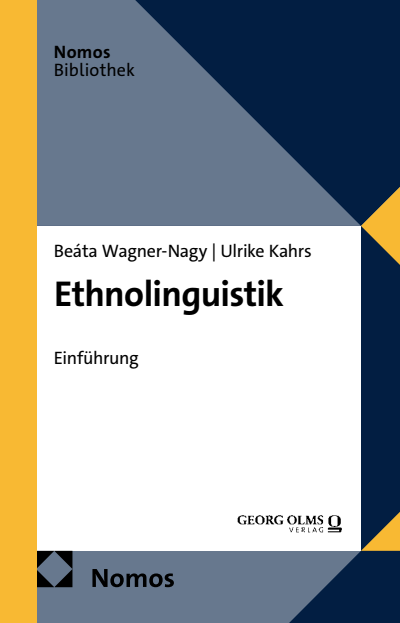
This book is aimed at all those who are interested in linguistic representations of conceptual structures. It introduces readers to ethnolinguistics, a field of study in which linguistic phenomena are interpreted against a cultural background. It shows how language groups describe their environment differently, taking into account their social and cultural contexts. Why do the indigenous people living in Western Siberia say that the Old Man of the Forest is going towards the tundra? How does that relate to their orientation in their environment? This introduction to linguistic codes is aimed at students of linguistics, ethnology and cultural anthropology as well as anyone interested in the relationship between language and culture.
Keywords
Search publication
Bibliographic data
Edition
1/2026
Copyright Year
2026
ISBN-Print
978-3-7560-1806-2
ISBN-Online
978-3-7489-4054-8
Publisher
Nomos, Baden-Baden
Series
NomosBibliothek
Language
German
Pages
206
Product Type
Textbook
Table of contents
ChapterPages
Vorwort No access
Abkürzungsverzeichnis No access
Besondere Zeichen No access
1. Einführung No access Pages 19 - 27
2.1 Sprachliche Repräsentation des menschlichen Körpers No access
2.2 Der menschliche Körper als Quellbereich No access
2.3 Orientierung im Raum mithilfe des Körpers No access
2.4 Messen und Mengenbestimmung mithilfe des Körpers No access
2.5 Körper, Emotionen und Sprache No access
3.1 Bunte Vielfalt No access
3.2 Farben in Phraseologismen No access
4.1 Westsibirien als Landschaft No access
4.2 Emische Kategorien No access
4.3 Hydrographisches Lexikon No access
4.4 Orographisches Lexikon No access
4.5 Vegetationsgeographisches Lexikon No access
5.1 Orientierung anhand der Sagittalebene No access
5.2 Orientierung anhand der Transversalebene No access
5.3 Orientierung anhand der Frontalebene No access
6.1 Solare oder polare Orientierung No access
6.2 Atmosphärische Gegebenheiten No access
6.3 Lokalgeographische Orientierung No access
6.4 Kulturspezifische Ausrichtung No access
6.5 Körperteile als konzeptuelle Quelle No access
6.6 Ethnonyme und Geschichte als konzeptuelle Quelle No access
7.1 Zeitausdrücke No access
7.2 Orientierung in der Zeit No access
7.3 Deiktische Tagesbezeichnungen No access
7.4 Kalendarische Zeit No access
8.1 Das ungarische Verwandtschaftssystem No access
8.2 Verwandtschaft über den Kreis der Familie hinaus No access
9.1 Sprachliche Tabuisierung No access
9.2 Tod und Tabu No access
9.3 Tiere und Tabu No access
10. Gruppenzugehörigkeit No access Pages 144 - 153
11.1 Zahlwortsysteme No access
11.2 Rechenoperationen No access
11.3 Zählmethoden No access
12.1 Nahrungsbeschaffung No access
12.2 Essenszubereitung No access
13. Informationsquellen No access Pages 173 - 186
14. Zusammenfassung und Ausblick No access Pages 187 - 190
Lexikon der Sprachen und Ethnien No access Pages 191 - 196