, to see if you have full access to this publication.
Edited Book No access
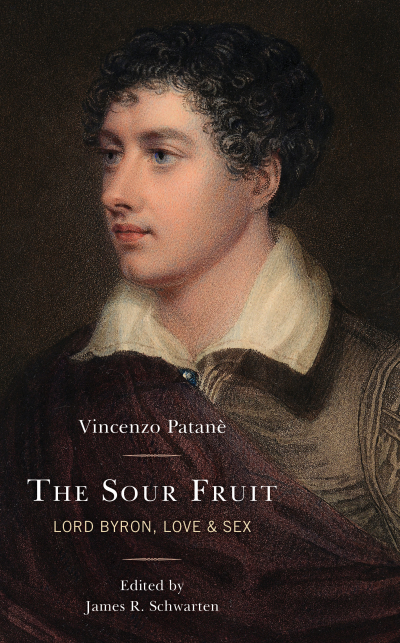
The Sour Fruit
Lord Byron, Love & Sex
Authors/Editors:
|
Publisher:
2018
Summary
Byron’s emotional and erotic life, which he indulged with an unstoppable energy, is a key element in understanding his powerful and passionate personality, as well as the society of his day, which was scandalised by his behaviour even while being conquered by his extraordinary charm.
The Sour Fruit. Lord Byron, Love & Sex looks at the poet’s now generally acknowledged bisexuality in all its aspects, from his fleeting liaisons to his love-affairs, female (his half-sister Augusta, Caroline Lamb and Teresa Guiccioli) and male (John Edleston, Nicolo Giraud and Loukas Chalandritsanos).
The book’s original approach provides unusual and fascinating insights, notably into Byron’s homosexuality, hitherto relatively unexplored, and reveals a more truthful picture of the poet. Byron was strongly attracted to boys, who are referred to in Don Juan as ‘sour fruit’. In his adolescence he had fallen for aristocratic contemporaries but would later be attracted to boys of a lower social station. He had several same-sex experiences in England, encouraged by the circle he frequented at Cambridge, particularly his friend Matthews, as well as during his Grand Tour, during which he was able to freely live out behaviours frowned on at home.
In early 19th-century England, homosexuality was a criminal offence punished with the pillory or even hanging, and Byron preferred to keep his transgressive experiences to himself, or share them only with a restricted group of like-minded friends. There are numerous veiled references to the range of his tastes in his works and his letters, which adopt a code aimed at the initiated that we are today better able to decipher. Innuendos abound, pointing to aspects of his submerged life, to adultery, incest and, above all, homosexuality – and we can now more fully appreciate the wit and verve of his letters as well as a clutch of agonised love-poems.
An appended chapter examines Don Leon, an anonymous work purporting to be by Byron himself and salaciously recounting his love-life, which was first published some forty years after his death and has been on more than one occasion banned for obscenity.