, to see if you have full access to this publication.
Monograph No access
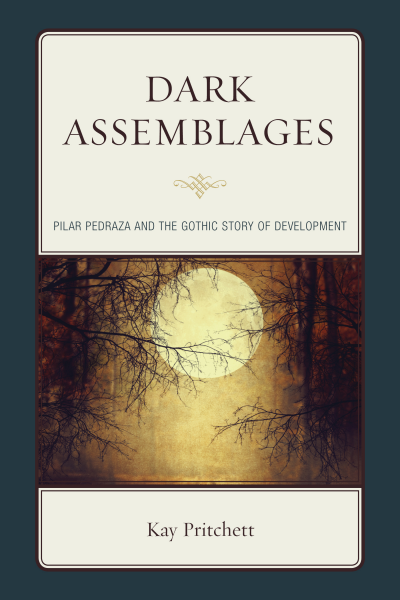
Dark Assemblages
Pilar Pedraza and the Gothic Story of Development
Authors:
Publisher:
2015
Summary
This book examines strategies of transformation (becomings, image-making, and the phantasmagoric) that figure in four stories and a novel by Gothic fiction writer Pilar Pedraza (Spain, 1951). While critics have long associated the Bildungsroman with Gothic fiction, this study takes a close look at the developmental process itself: the means by which a protagonist, young or old, might transcend a deprived status to achieve a complete sense of self. Pedraza's works imply that, regardless of the path followed, a character's ability to think differently is crucial to progress. The fixed image, representative of an inflexible, socially determined mindset, arises as an obstacle to maturation. In "Días de perros," for example, a triangular arrangement of coins in a cigar box elucidates the connection between individual lives and the social order or assemblage. Literary texts, such as this one, serve as collective assemblages of enunciation, capable of exposing fixed images as powerful instruments of control. "Tristes Ayes del Águila Mejicana" discovers fixed images among the icons of Colonial Spain's exequias reales, used in this case to territorialize the evolving identity of indigenous peoples.
The territory thatPedraza's fictionbest illuminates is, in reality, the image. When images remain fixed or territorialized, they uncannily infect the assemblages over which they exert influence. Placing emphasis on images that impact women, Pedraza, in "Anfiteatro," for example, deconstructs "cat woman," which, albeit a potentially subversive image in its early manifestations, eventually ceases to empower the feminine, lashing it, rather, to a burdensome stereotype. Territorialized, the feminine must, then, break free from the image in order to discover representations more capable of illuminating present-day challenges.
The phrase "dark assemblages," drawn from Deleuze and Guattari's A Thousand Plateaus, gestures toward societal stagnation as a decisive factor in individual evolvement. Gothic fiction represents an uneven landscape, in that it tenders the possibility of a social critique yet, equally well, lends itself to the exclusion of specific identities and practices that society brands as anomalous. Pedraza's Gothic fiction is, indeed, subversive, in that it offers readers original perceptions of modern day people and the assemblages, dark or otherwise, to which they belong.
Keywords
Search publication
Bibliographic data
Edition
1/2015
Copyright Year
2015
ISBN-Print
978-1-61148-672-8
ISBN-Online
978-1-61148-673-5
Publisher
Lexington, Lanham
Language
English
Pages
203
Product Type
Monograph
Table of contents
ChapterPages
Contents No access
Acknowledgments No access
Introduction No access Pages 1 - 32
1 Pilar Pedraza No access Pages 33 - 70
2 Becoming in “Mater Tenebrarum” No access Pages 71 - 92
3 Image and the Inscrutability of Transformation in Las novias inmóviles No access Pages 93 - 120
4 The Phantasmagoric (Part One) No access Pages 121 - 140
5 The Phantasmagoric (Part Two) No access Pages 141 - 160
6 Forces of Encounter in “Días de perros” No access Pages 161 - 180