, to see if you have full access to this publication.
Monograph No access
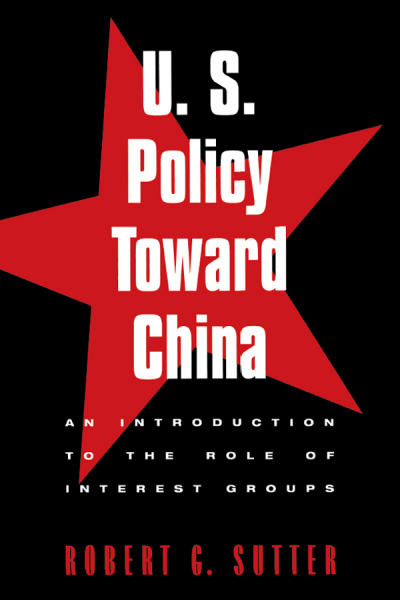
U. S. Policy Toward China
An Introduction to the Role of Interest Groups
Authors:
Publisher:
1998
Summary
Increased fluidity and pluralism in U.S. policy toward China in the postDCold War period have led to growing non-governmental influence as both the administration and Congress have become the target of intense lobbying by organized groups concerned with human rights, trade opportunities, relations with Taiwan, and other hotly debated issues. This balanced study examines the central role of these organizations, focusing especially on two key cases of policy reversal: President Clinton's 1994 decision to delink human rights concerns from trade access and his 1995 decision to allow Taiwan's president to visit the United States, albeit in a private capacity. The recent movement toward a more consistent and coherent administration policy on China remains tentative and has been under mounting attack, especially in the wake of Asian campaign contributions. Although recognizing that U.S. policymakers must consider a wider range of interests than was the case during the Cold War, Sutter argues that following the prevailing consensus among organized interests may lead to bad policy. Instead, he contends that U.S. foreign policy must strike a balance between satisfying domestic concerns while buttressing interests abroad.
Search publication
Bibliographic data
Edition
1/1998
Copyright Year
1998
ISBN-Print
978-0-8476-8724-4
ISBN-Online
978-1-4616-6675-2
Publisher
Rowman & Littlefield, Lanham
Language
English
Pages
171
Product Type
Monograph
Table of contents
ChapterPages
Table of Contents No access
Implications for Future U.S.-China Relations No access
Post-Cold War Debate in U.S. Foreign Policy No access
Three Approaches to U.S.-China Policy No access
Bush's View of U.S. Policy toward China, 1989 No access
Consideration of MFN for China, 1990 No access
Broadening, Deepening Policy Debate, 1991-1992 No access
Moderating Debate Prior to the 1991 Crisis No access
Incremental Change amid Mixed Signals No access
Crisis over MFN, 1991 No access
The Bush Administration Toughens No access
Overview No access
The Tug-of-War over MFN during the Clinton Administration, 1993-1994 No access
The Lee Teng-hui Visit and U.S.-PRC-Taiwan Relations No access
The Tug-of-War over Taiwan: Influential Organized Interests No access
The Rise of China No access
The Washington Summit, October 1997-Expectations and Outcome No access