, to see if you have full access to this publication.
Monograph No access
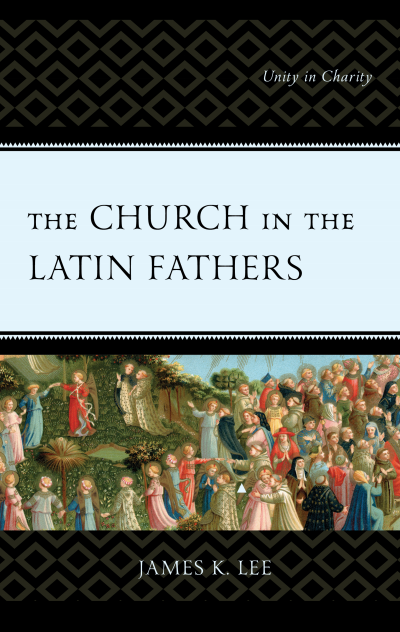
The Church in the Latin Fathers
Unity in Charity
Authors:
Publisher:
2020
Summary
What is the church? What does it mean to be a member of the church? This book examines how the earliest Christian theologians in the Latin West understood the nature, ends, and boundaries of the church. By analyzing the thought and practices of figures such as Tertullian of Carthage, Cyprian of Carthage, Augustine of Hippo, and Pope Leo the Great, James K. Lee shows how early Latin theologians forged distinctive views of the church as one, holy, catholic, and apostolic.
Lee argues that according to the Latin fathers, the church was one complex reality with visible and invisible aspects that could be distinguished but not separated. God could work outside of the church’s visible bounds, yet all who were saved were joined to the church’s invisible bond of charity. The church’s unity was found in charity, and for the early Latin fathers, there was no salvation outside of the church. In addition, Lee demonstrates the trajectory from an exclusivist ecclesiology to a more inclusive understanding of church membership in the development of Latin ecclesiology over the course of the first five centuries of Christianity.
Keywords
Search publication
Bibliographic data
Edition
1/2020
Copyright Year
2020
ISBN-Print
978-1-9787-0687-3
ISBN-Online
978-1-9787-0688-0
Publisher
Lexington, Lanham
Language
English
Pages
123
Product Type
Monograph
Table of contents
ChapterPages
Contents No access
Acknowledgments No access
Abbreviations No access
Introduction No access Pages 1 - 12
1 Tertullian of Carthage No access Pages 13 - 40
2 Cyprian of Carthage No access Pages 41 - 58
3 Augustine of Hippo No access Pages 59 - 90
4 Leo the Great No access Pages 91 - 106
Conclusion No access Pages 107 - 114
Bibliography No access Pages 115 - 118
Index No access Pages 119 - 122
About the Author No access Pages 123 - 123
Similar publications
from the topics "Religion und Theologie allgemein"