, to see if you have full access to this publication.
Monograph No access
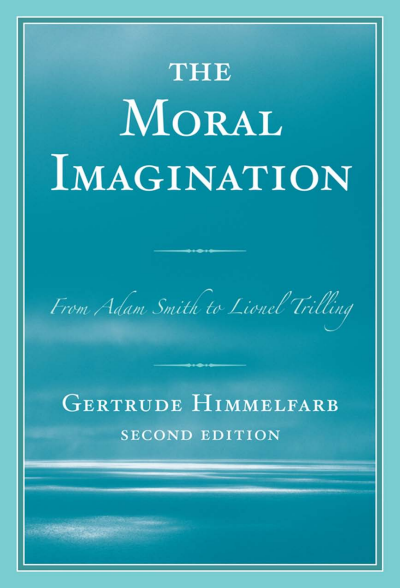
The Moral Imagination
From Adam Smith to Lionel Trilling
Authors:
Publisher:
2012
Summary
In The Moral Imagination, Gertrude Himmelfarb, one of America's most distinguished intellectual historians, explores the minds and lives of some of the most brilliant and provocative thinkers of modern times. In their distinctive ways, she argues, they exemplify what Burke two centuries ago and Trilling most recently have called the “moral imagination.” Himmelfarb describes how each of these thinkers, coming from different traditions, responding to different concerns, and writing in different genres, shared a moral passion that permeated their work. It is this passion that makes their reflections—on politics and literature, religion and society, marriage and sex—sometimes unpredictable, often controversial, always exciting, and as illuminating and pertinent today as they were then.
Search publication
Bibliographic data
Edition
2/2012
Copyright Year
2012
ISBN-Print
978-1-4422-1829-1
ISBN-Online
978-1-4422-1830-7
Publisher
Rowman & Littlefield, Lanham
Language
English
Pages
316
Product Type
Monograph
Table of contents
ChapterPages
Contents No access
Introduction No access
Adam Smith: Political Economist cum Moral Philosopher No access Pages 3 - 20
Edmund Burke: Apologist for Judaism? No access Pages 21 - 29
George Eliot: The Wisdom of Dorothea No access Pages 30 - 42
Jane Austen: The Education of Emma No access Pages 43 - 53
Charles Dickens: “A Low Writer” No access Pages 54 - 86
Benjamin Disraeli: The Tory Imagination No access Pages 87 - 111
John Stuart Mill: The Other Mill No access Pages 112 - 138
Walter Bagehot: “A Divided Nature” No access Pages 139 - 152
Lord Acton: The Historian as Moralist No access Pages 153 - 166
Alfred Marshall: “The Economics of Chivalry” No access Pages 167 - 184
John Buchan: An Untimely Appreciation No access Pages 185 - 205
The Knoxes: A God-Haunted Family No access Pages 206 - 226
Michael Oakeshott: The Conservative Disposition No access Pages 227 - 246
Winston Churchill: “Quite Simply, a Great Man” No access Pages 247 - 268
Lionel Trilling: The Moral Imagination No access Pages 269 - 280