, to see if you have full access to this publication.
Monograph No access
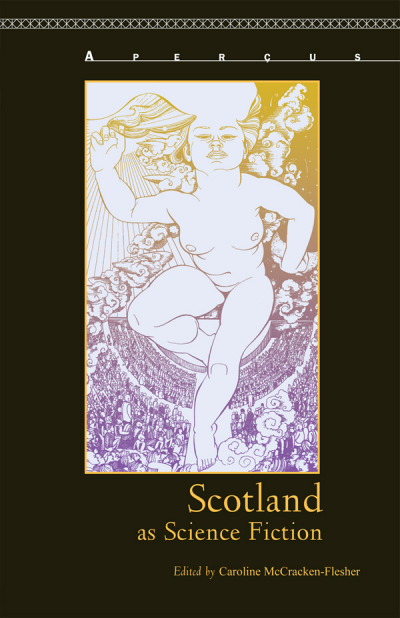
Scotland As Science Fiction
Authors:
Publisher:
2011
Summary
Out of the mainstream but ahead of the tide, that is Scottish Science Fiction. Science Fiction emphasizes “progress” through technology, advanced mental states, or future times. How does Scotland, often considered a land of the past, lead in Science Fiction? “Left behind” by international politics, Scots have cultivated alternate places and different times as sites of identity so that Scotland can seem a futuristic fiction itself.
This book explores the tensions between science and a particular society that produce an innovative science fiction. Essays consider Scottish thermodynamics, Celtic myth, the rigors of religious “conversion,” Scotland’s fractured politics yet civil society, its languages of alterity (Scots, Gaelic, allegory, poetry), and the lure of the future. From Peter Pan and Dr. Jekyll to the poetry of Edwin Morgan and the worlds of Muriel Spark, Ken Macleod, or Iain M. Banks, Scotland’s creative complex yields a literature that models the future for Science Fiction.
Search publication
Bibliographic data
Edition
1/2011
Copyright Year
2011
ISBN-Print
978-1-61148-374-1
ISBN-Online
978-1-61148-375-8
Publisher
Lexington, Lanham
Language
English
Pages
198
Product Type
Monograph
Table of contents
ChapterPages
Contents No access
Acknowledgments No access
Introduction No access Pages 1 - 14
Scotland’s Fantastic Physics: Energy Transformation in MacDonald, Stevenson, Barrie, and Spark No access Pages 15 - 28
The Other Otherworld: Didactic Fantasy from MacDonald and Lindsay to J. Leslie Mitchell No access Pages 29 - 42
Allegory and Cruelty: Gray’s Lanark and Lindsay’s A Voyage to Arcturus No access Pages 43 - 54
Speculative Nationality: “Stands Scotland Where it Did?” in the Culture of Iain M. Banks No access Pages 55 - 66
Between Enlightenment and the End of History: Ken MacLeod’s Engines of Light No access Pages 67 - 84
The Cosmic (Cosmo)Polis in Naomi Mitchison’s Science Fiction Novels No access Pages 85 - 100
Nonviolence, Gender, and Ecology: Margaret Elphinstone’s The Incomer and A Sparrow’s Flight No access Pages 101 - 116
Past and Future Language: Matthew Fitt and Iain M. Banks No access Pages 117 - 132
Scottish Poetry as Science Fiction: Geddes, MacDiarmid, and Morgan’s “A Home in Space” No access Pages 133 - 152
Brave New Scotland: Science Fiction without Stereotypes in Fitt and Crumey No access Pages 153 - 170
Alba Newton and Alasdair Gray No access Pages 171 - 184
Bibliography No access Pages 185 - 190
Index No access Pages 191 - 194
About the Editor and Contributors No access Pages 195 - 198