, to see if you have full access to this publication.
Edited Book No access
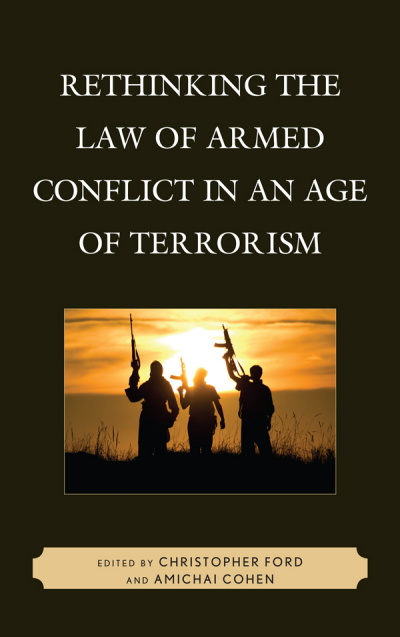
Rethinking the Law of Armed Conflict in an Age of Terrorism
Editors:
|
Publisher:
2011
Summary
Ten years after the terrorist attacks of September 11, 2011, Rethinking the Law of Armed Conflict in an Age of Terrorism, edited by Christopher Ford and Amichai Cohen, brings together a range of interdisciplinary experts to examine the problematic encounter between international law and challenges presented by conflicts between developed states and nonstate actors, such as international terrorist groups. Through examinations of the counter-terrorist experiences of the United States, Israel, and Colombia—coupled with legal and historical analyses of trends in international humanitarian law—the authors place post-9/11 practice in the context of the international legal community’s broader struggle over the substantive content of international rules constraining state behavior in irregular wars and explore trends in the development of these rules.
From the beginning of international efforts to rewrite the laws of armed conflict in the 1970s, the legal rules to govern irregular conflicts of the “state-on-nonstate” variety have been contested terrain. Particularly in the wake of the 9/11 attacks, policymakers, lawyers, and scholars have debated the merits, relevance, and applicability of what are said to be competing “war” and “law enforcement” paradigms of legal constraint—and even the degree to which international law can be said to apply to counter-terrorist conflicts at all. Ford & Cohen’s volume puts such debates in historical and analytical context, and offers readers an insight into where the law has been headed in the fraught years since September 2001. The contributors provide the reader with differing perspectives upon these questions, but together their analyses make clear that law-governed restraint remains a cardinal value in counter-terrorist war, even as the law stands revealed as being much more contested and indeterminate than many accounts would have it. Rethinking the Law of Armed Conflict in an Age of Terrorism provides an important conceptual framework through which to view the development of the law as the policy and legal communities move into the second decade of the “global war on terrorism.”
Search publication
Bibliographic data
Edition
1/2011
Copyright Year
2011
ISBN-Print
978-0-7391-6653-6
ISBN-Online
978-0-7391-6654-3
Publisher
Lexington, Lanham
Language
English
Pages
326
Product Type
Edited Book
Table of contents
ChapterPages
Contents No access
Preface and Acknowledgments No access
Introduction: Rethinking Armed Conflict in an Age of Terrorism No access
Chapter 01. The Law That Turned Against Its Drafters No access Pages 1 - 40
Chapter 02. The Strange Pretensions of Contemporary Humanitarian Law No access Pages 41 - 70
Chapter 03. Targeted Killing No access Pages 71 - 98
Chapter 04. Guarding the Guards in the War on Terrorism No access Pages 99 - 132
Chapter 05. The Foreign Intelligence Surveillance Puzzle No access Pages 133 - 166
Chapter 06. Terrorism-Related Adjudication No access Pages 167 - 194
Chapter 07. Necessity, Proportionality, and Distinction in Nontraditional Confl icts No access Pages 195 - 214
Chapter 08. Confronting Terrorism No access Pages 215 - 228
Chapter 09. Living in the “New Normal” No access Pages 229 - 304
Chapter 10. Some Conclusions and Thoughts for the Future No access Pages 305 - 314