, to see if you have full access to this publication.
Monograph No access
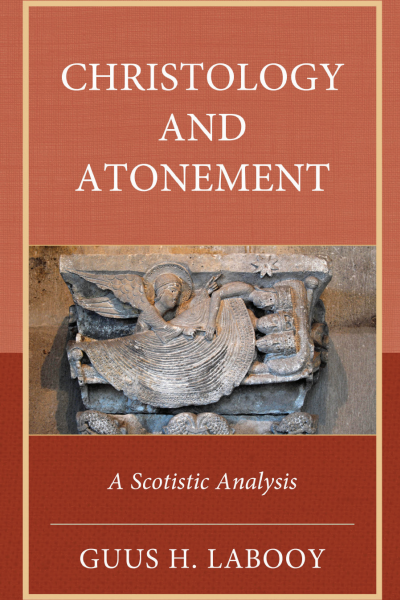
Christology and Atonement
A Scotistic Analysis
Authors:
Publisher:
2024
Summary
This scotistic study in analytical theology presupposes Conciliar Christology and aims at a more profound understanding of two vital and connected Christian doctrines: Christology and atonement. The beating heart of the first part is Duns Scotus’s compelling analysis of the incarnation: his uniquely successful analysis of the “hypostatic union.” Following Marilyn McCord Adams, Guus H. Labooy argues that the problem of Christological predication can be solved by probing the metaphysical backbone of “qua-propositions” (expressions like “as regards his Godhead” and “as regards his manhood”). Labooy dedicates the second part of the book to the analysis of atonement, especially to its most controversial aspect, “penal substitution.” The Messiah dying for our sins is perhaps the storm centre of the confrontation between Christian faith and the secular intellectual mindset. Labooy argues on exegetical grounds that all the current models of atonement are complementary. None of them should be discarded and neither should penal substitution. The account of penal substitution (or vicarious penance) he defends is shaped with the decisive aid of Scotus’s analytical tools.
Keywords
Search publication
Bibliographic data
Edition
1/2024
Copyright Year
2024
ISBN-Print
978-1-9787-1359-8
ISBN-Online
978-1-9787-1360-4
Publisher
Lexington, Lanham
Language
English
Pages
180
Product Type
Monograph
Table of contents
ChapterPages
Contents No access
Preface No access
Introduction No access Pages 1 - 6
Preliminary Considerations No access
The Hypostatic Union No access
Stepped Characterisation No access
Two Intellects No access
Two Wills No access
Supralapsarian Christology No access
Scotus on Atonement No access
The Meaning of the Passion, an Exegetical Excursion No access
The Coherence of Penal Substitution No access
Vicarious Penance No access
Glossary No access Pages 163 - 164
Bibliography No access Pages 165 - 174
Index No access Pages 175 - 178
About the Author No access Pages 179 - 180
Similar publications
from the topics "Religion und Theologie allgemein"