, to see if you have full access to this publication.
Monograph No access
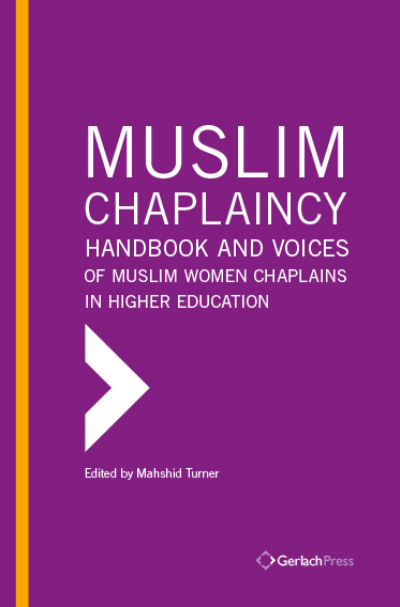
Muslim Chaplaincy
Handbook and Voices of Muslim Women Chaplains in Higher Education- Authors:
- Publisher:
- 2025
Keywords
Search publication
Bibliographic data
- Edition
- 1/2025
- Copyright Year
- 2025
- ISBN-Print
- 978-3-95994-170-9
- ISBN-Online
- 978-3-95994-171-6
- Publisher
- Gerlach Press, Berlin
- Language
- English
- Pages
- 248
- Product Type
- Monograph
Table of contents
ChapterPages
- Front Matter No access Pages i - iv
- Table of Contents No access Pages v - vi
- Acknowledgements No access Pages vii - viii
- Foreword No access Pages ix - x
- 1 Introduction No access Pages 3 - 6
- 2 History of Christian Chaplaincy No access Pages 7 - 8
- 3 History of Muslim Chaplaincy No access Pages 9 - 12
- The Difference between Chaplains and Imams No access
- Theological Framework for Muslim Chaplaincy No access
- Definition of Muslim Chaplaincy No access
- Our Adamic Nature: The Human Story No access
- 5 The Role of Prophets as ‘Shepherds of Transcendence’ No access Pages 17 - 20
- Adam as Archetype for Human Beings No access
- The Cosmological Journey of Abraham No access
- Joseph No access
- Jonah (Yunus) No access
- The Story of Ayyūb (Job) No access
- The Story of Solomon No access
- The Story of Moses No access
- Mohammad - Seal of the Prophets No access
- 7 How Can Muslim Theology be Practiced in Pluralistic Settings? No access Pages 39 - 40
- How Does Chaplaincy Differ from Counselling? No access
- Reading the ‘Signs’: A Model for Chaplaincy No access
- Theological Reflection: A Muslim Perspective No access
- Reading the Signs in Creation: Divine Unity No access
- The ‘Trust’: The Human ‘I’ No access
- How to Read the Signs in Creation No access
- 10 Critical Reflection, Self-vigilance (murāqaba) and Self-accounting (muḥāsaba) No access Pages 53 - 58
- Building Bridges between Students and Staff Needs and University Service-providers: Case Studies No access
- Conclusion No access
- Unity (wāḥidiyya) and Oneness (aḥadiyya) No access
- Compassion (raḥmānīyya) and Mercy (raḥīmmiyya) No access
- Case Study One No access
- Case Study Two No access
- Case Study Three No access
- Case Study Four No access
- Case Study Five No access
- Case Study Six No access
- Case Study Seven No access
- Notes No access Pages 81 - 86
- Bibliography No access Pages 87 - 90
- Introduction No access Pages 93 - 94
- What is a Chaplain? No access
- Chaplaincy and Societal Change No access
- Organisational Change and Chaplaincy No access
- Muslim Women in Chaplaincy No access
- Leading Chaplaincy and Volunteers No access
- Muslim Chaplaincy in the University of Sheffield No access
- The Muslim Chaplain, Islam and Chaplaincy Practice No access
- Vision and Strategy for Muslim Chaplaincy No access
- Information Gathering Involved Looking at Three Areas No access
- Having a Chaplaincy Vision, Objectives and Considering KPIs No access
- The Future of Muslim Chaplaincy in Higher Education No access
- Glossary No access
- My Journey as a Female Muslim Chaplain in Higher Education No access
- The Roles and Responsibilities of a Muslim Chaplain No access
- Spiritual Needs No access
- Counselling and Emotional Needs No access
- Educational (Religion-specific) Needs No access
- Continuity and Point of Contact No access
- Pastoral Sessions No access
- Educational (Religion-specific) Needs and Tackling Islamophobia No access
- Continuity and Point of Contact No access
- Eliminating Differences and Clarifying Misunderstandings No access
- Catering for the Needs of Minorities and Averting any Possible Sectarian Disagreements No access
- Perceptions about the Role of a Female Muslim Chaplain No access
- Challenges of Working in a Pluralistic and Interfaith Context No access
- Qualities and Code of Practice for a Muslim Chaplain in Higher Education No access
- Where do I Stand According to this Criterion, and What are my Shortcomings? No access
- My Chaplaincy Training Experience No access
- My Chaplaincy Experience Prior to my Job Offer No access
- The Unexpected Offer No access
- The Support and Encouragement for the Role of a Female Muslim Chaplain No access
- A Tough Decision No access
- Conclusion No access
- Sowing the Seeds of a Career in Chaplaincy No access
- My First Chaplaincy Appointment No access
- Chaplains as Theologians and Pastoral Carers No access
- Adopting Chaplaincy as a Profession No access
- Principles Underpinning my Chaplaincy Work No access
- The Role of Chaplaincy in Holistic Education No access
- Dispelling Myths about Islam and Muslims No access
- Supporting Students Who Adopt Islam No access
- Other Aspects of My Role No access
- Concluding Remarks No access
- Childhood Days in Iran No access
- Childhood Days in England No access
- Married Life No access
- Working Life No access
- Chaplaincy at Durham University No access
- Building Trust No access
- Pastoral Care No access
- Role as Mediator, Moderator and Educator No access
- Prophetic Role No access
- Involvement in the University BAME Network No access
- Faith Societies No access
- Case Studies No access
- Coffee, Cake and Contemplate - FGM, Forced Marriage, Honour Killing No access
- Ramadan Exam Timetabling and Prayer Allowance No access
- Medicine Course Human Anatomy No access
- Covid and the Spike of Mental Health Issues No access
- Ramadan Workshops & ‘Our Shared Britain’ No access
- Islamic Centre, Faith Spaces & Security No access
- International Crises: Palestine and Syria No access
- Journey to Chaplaincy No access
- How the Role has Evolved to Respond to Demographic Changes in Higher Education No access
- Evolution of Physical, Mental, and Spiritual Professional Services/Facilities within a University No access
- Notes No access Pages 215 - 216
- Bibliography No access Pages 217 - 220
- How would you describe Muslim chaplaincy? No access
- Are there any conflicts of interest given that you’re a Muslim who is also an interfaith chaplain? No access
- Why did you become a Muslim chaplain? No access
- Why is it important to have a Muslim chaplain in university? No access
- Can you list the jobs you do as a chaplain? No access
- What percentage of your work is faith-based and what percentage practical? No access
- How is the value that you contribute to Muslim chaplaincy measured? No access
- Do you record every activity? No access
- What are the challenges that chaplains face? No access
- Is there adequate knowledge out there about the work of Muslim women chaplains? No access
- Tell me about your resources. No access
- How would you describe Muslim chaplaincy? No access
- Why did you become a Muslim chaplain? No access
- Could you give us a case example? No access
- Why did you choose to become a chaplain? No access
- Why is it important to have a Muslim chaplain in university? No access
- Can you list some of the jobs you do as a Muslim woman chaplain? No access
- How is your work measured and/or acknowledged? No access
- What challenges do you face as a chaplain? No access
- Can you tell me a bit about your university and the chaplaincy team in your institution? No access
- How would you describe the role of Muslim chaplains? No access
- Why did you become a Muslim chaplain? No access
- Did you undergo any training for chaplaincy? No access
- Why do you think it is important to have a Muslim chaplain in a university? No access
- Why is it particularly important to have a woman Muslim chaplain? No access
- Can you give examples of some of the jobs you do as a Muslim chaplain? No access
- What proportion of cases focus more on faith/belief as opposed to practical problems? No access
- How is the value that you contribute to Muslim chaplaincy measured or acknowledged? No access
- Describe some of the challenges for Muslim chaplains generally and women chaplains in particular? No access
- Do you think there is adequate knowledge about the work of Muslim women chaplains? No access
- 4 Concluding Remarks No access Pages 245 - 246
- About the Contributors No access Pages 247 - 248