, to see if you have full access to this publication.
Monograph No access
Seven Ways of Knowing
Authors:
Publisher:
2012
Summary
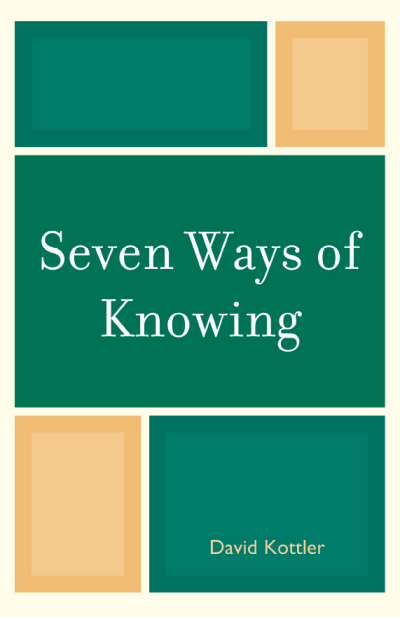
Seven Ways of Knowing is an examination of what we mean when we say we know something, and the extent and sureness of this knowledge. It starts with an analysis of our perception of material objects, the role of evolution, and the nature of space and time. A non-mathematical description of relativity and quantum theory is given in the opening chapters (with a more technical treatment in two appendices). Abstract knowledge, knowledge derived from reading and the media (second hand knowledge), and how we know other persons are the subjects of the next three chapters. These are followed by a chapter on how objectively we can distinguish good and evil and then an appraisal of whether there can be a rational belief in any religion. The book ends with a theory of perception, which offers the possibility of a coherent understanding of all the topics: it is compulsive and entirely original.
Search publication
Bibliographic data
Edition
1/2012
Copyright Year
2012
ISBN-Print
978-0-7618-5189-9
ISBN-Online
978-0-7618-5190-5
Publisher
Hamilton Books, Lanham
Language
English
Pages
130
Product Type
Monograph
Table of contents
ChapterPages
Table of Contents No access
Preamble No access
Introduction No access Pages 1 - 4
1: The Basis of Perception and Knowing No access Pages 5 - 18
2: The Perception of Space, Time and Matter No access Pages 19 - 40
3: Knowledge of Abstract Things No access Pages 41 - 48
4: Book Knowledge No access Pages 49 - 56
5: Knowing Persons No access Pages 57 - 76
6: Morality: The Knowledge of Good and Evil No access Pages 77 - 88
7: Religious Belief: The Knowledge of God No access Pages 89 - 98
8: A Theory of Perception: WYSIWIRT No access Pages 99 - 108
Appendix 1: An Introduction to Mathematics No access Pages 109 - 118
Appendix 2: Relativity and Quantum Mechanics No access Pages 119 - 128