, to see if you have full access to this publication.
Edited Book No access
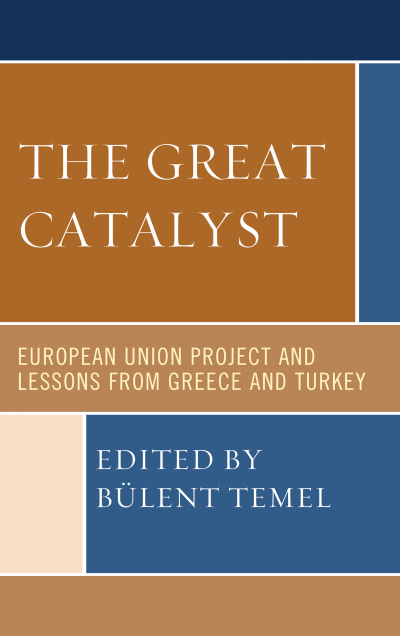
The Great Catalyst
European Union Project and Lessons from Greece and Turkey
Editors:
Publisher:
2013
Summary
For over half a century, European Union has been a promising endeavor of cooperative institutionalism. It has shown that even nation states with a long history of conflict are capable of collaborating with one another to serve their own interests. However, the EU project has also made visible that there is no one-size-fits-all policy in economics that can be applied to all countries with success. Economics starts and ends with the society. Common culture determines the outcomes of economic policies, and ordinary people pick up the bill when policies turn out to be failures.
This book presents two different tales of the European Union to provide an empirical challenge to oversimplified assumptions behind the neoliberal orthodoxy in policymaking: Favorable experience of the EU-candidate Turkey, and the regrettable venture of the EU-member Greece. The fact that these two neighboring countries with similar cultures have had vastly different experiences with the European Union suggests that the EU functions as a catalyst of change in the countries that associate with it, but this impact could be negative as well as positive depending on the role the EU plays. Political economist Bülent Temel presents a lucid analysis of the Turkish and Greek encounters with the EU—based on contributions from a diverse range of social sciences; economics, game theory, finance, political science and sociology.
Search publication
Bibliographic data
Edition
1/2013
Copyright Year
2013
ISBN-Print
978-0-7391-7448-7
ISBN-Online
978-0-7391-7449-4
Publisher
Lexington, Lanham
Language
English
Pages
420
Product Type
Edited Book
Table of contents
ChapterPages
Contents No access
Tables and Figures No access
Appendix Items No access
Introduction No access Pages 1 - 8
Chapter 1. Greece and the Eurozone: Staying or Leaving? No access Pages 9 - 34
Chapter 2. Euro and the Economic Crisis in Greece No access Pages 35 - 46
Chapter 3. Doomed to Failure: The European Union’s Role in the Greek Debt Crisis No access Pages 47 - 82
Chapter 4. Effects of Economic and Monetary Union on the Greek Political System: Dimensions of the Current Crisis No access Pages 83 - 94
Chapter 5. Greece and the European Union: Neoliberalism and its Discontents No access Pages 95 - 112
Chapter 6. Acrobats on a Rope: Greek Society between Contemporary European Demands and Archaic Cultural Reflexes No access Pages 113 - 134
Chapter 7. Regularizing the Unregulated? European Union’s Role in the Undocumented Immigration Problem in Greece No access Pages 135 - 154
Chapter 8. EU Fervor in Turkey: Foreign Policy as a Domestic Political Apparatus No access Pages 155 - 172
Chapter 9. Alignment of Turkish Securities Market Legislation with the EU Acquis: Does EU Membership Offer Additional Benefits? No access Pages 173 - 200