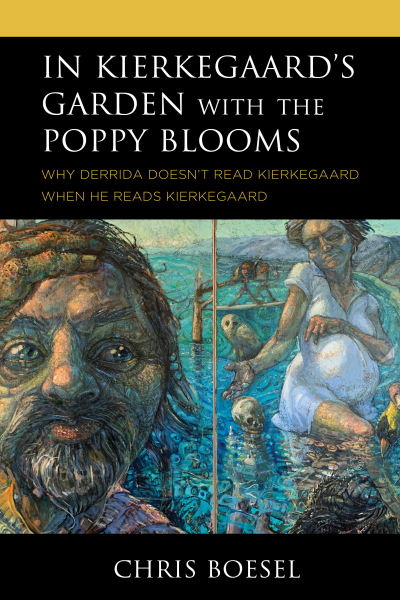
In Kierkegaard's Garden with the Poppy Blooms
Why Derrida Doesn't Read Kierkegaard When He Reads Kierkegaard- Authors:
- Publisher:
- 2021
Summary
Chris Boesel invites readers into a Kierkegaardian style literary conceit, creating two pseudonymous voices—one philosophical and deconstructive, one theological and confessional—in order to stage an encounter between two commentaries on Kierkegaard's Fear and Trembling. On one level, the contest between the two commentaries demonstrates the extent to which an encounter between deconstruction and Kierkegaard has not taken place in the one place everyone thinks it has, in Derrida’s reading of Fear and Trembling in The Gift of Death. On a deeper level, Boesel argues that Derrida’s misreading of Fear and Trembling is both source and symptom of a wider problem: an apophatic blind spot in deconstructive engagements with Christian theology in philosophy of religion and postmodern theology. This blind spot erases the theological and ethical possibilities of what Boesel calls a Kierkegaardian confessional faith, possibilities rooted in a “deconstructive deconstructibility” that produces its own deconstructive-like effects. As a corrective to this blind spot, the encounter between deconstruction and Kierkegaard staged here shows how these effects do the very things heralded by self-proclaimed apophatic remedies of “confessional faith”: disrupt human mastery over God and neighbor while calling for concrete commitments to justice for the widow, orphan and stranger.
Keywords
Search publication
Bibliographic data
- Edition
- 1/2021
- Copyright Year
- 2021
- ISBN-Print
- 978-1-9787-0651-4
- ISBN-Online
- 978-1-9787-0652-1
- Publisher
- Lexington, Lanham
- Language
- English
- Pages
- 318
- Product Type
- Monograph
Table of contents
- Dedication No access
- Contents No access
- Acknowledgments No access
- Abbreviations No access
- The Critical Contention: What Occurs in Kierkegaard’s Garden with the Poppy Blooms No access
- The Constructive Contention: The Deconstructive Deconstructibility of a Kierkegaardian Confessional Faith No access
- Goals and Theses No access
- Layout of the Book No access
- Notes No access
- A Kierkegaardian Literary Device No access
- Some Preliminaries No access
- Reading this Book No access
- Notes No access
- Context and Confusion: The “Turns” and the Anglo-American Reception No access
- Focusing Our Concern: The Unnecessary Confusion No access
- The Gift of Death in the Context of the Turns No access
- A Brief Layout of The Gift of Death and its Themes No access
- Notes No access
- Catching Hold of the Interpretive Thread No access
- The Secret of Responsibility as History without End: Responsibility as Irresponsibility No access
- The Secret of Responsibility as Conceptual Aporia: The Impossibility of Responsibility—Everywhere No access
- The Secret as Deconstructive Concept: A Distinctively Radical Epistemological Limit No access
- The Effects of the Secret as Deconstructive Concept: Justice as “Mystagogical Hypocrisy” and “Fabricated Mystery” No access
- Notes No access
- Establishing the Link Between the Secret and Death: Patočka’s Relation to Divine Transcendence as a Kind of Death No access
- The Deconstructive Operation: The Radical Substitutability of God, Death, and the Neighbor as Sources of Responsibility—Patočka, Heidegger, and Levinas No access
- “Religion without Religion” as “Relation without Relation”: The Arche-Grammatological Sphere of Relation No access
- A Bit of Ad Hoc Theological Commentary: Who Exactly Is Failing to Thematize God as Person? No access
- Notes No access
- Linking Patočka and Kierkegaard: A Phenomenological Parenthesis and a Passing Reference to the Apostle Paul No access
- God Keeps Silent No access
- What the Text of Fear and Trembling Actually Says No access
- The Theological Significance for Kierkegaard on Faith No access
- Implications for Derrida’s Reading and for Deconstruction No access
- Notes No access
- What the Text of Fear and Trembling Actually Says No access
- The Theological Significance for Kierkegaard on Faith No access
- Implications for Derrida’s Reading and for Deconstruction No access
- Notes No access
- What the Text of Fear and Trembling Actually Says: Faith as a Double Movement No access
- The Theological Significance for Kierkegaard on Faith: The Happy Burgher and the Angry Marxist No access
- Implications for Derrida’s Reading and for Deconstruction No access
- Notes No access
- The Incognito of Faith and the Divine Incognito of the Incarnation No access
- The Double Movement of Faith and an Informal Doctrine of Baptism No access
- The (Albeit Substitutable) Cruciform Marks of the Baptized: Poverty, Joy, and the Praxis of Solidarity No access
- Notes No access
- Abraham Cannot Speak: A Double Necessity No access
- Abraham’s Silence as Aporia of Responsibility No access
- Speaking without Speaking: Abraham’s Silence as Deconstructive Figure for All Speaking No access
- What the Text of Fear and Trembling Actually Says: Abraham’s Silence and the Double Movement No access
- The Theological Significance for Kierkegaard on Faith: Witness and Testimony (without Authority) and an Informal Doctrine of the Holy Spirit No access
- Implications for Derrida’s Reading and for Deconstruction No access
- Notes No access
- The Linkage No access
- The Distinctively Deconstructive Nature of Substitution: Radical Passivity No access
- The Consequences of Deconstructive Substitution: Disposability No access
- The Fear and Trembling of Jacques Derrida: The Passages of Lament No access
- What the Text of Fear and Trembling Actually Says: Selling Abraham—and God—on the Cheap No access
- The Theological Significance for Kierkegaard on Faith No access
- Implications for Derrida’s Reading and for Deconstruction: The “Vanishing Point” and the “Clearance Sale”—Derrida Plays Hegel No access
- Notes No access
- Keeping the Game Alive: God, Neighbor, and Salvation No access
- Deconstructing Salvation: Abraham’s Calculating Sacrifice of Calculation and God’s Rewarding of the Sacrifice of Reward No access
- The General Economy of Sacrifice Cuts both Ways: Deconstructing both Economies of Sacrifice and the Gift No access
- Deconstruction Is Not the Gift v Economies of Sacrifice No access
- Notes No access
- Note No access
- Appendix: Where Are They Now? No access Pages 293 - 294
- Bibliography No access Pages 295 - 306
- Index No access Pages 307 - 316
- About the Author No access Pages 317 - 318