, to see if you have full access to this publication.
Monograph No access
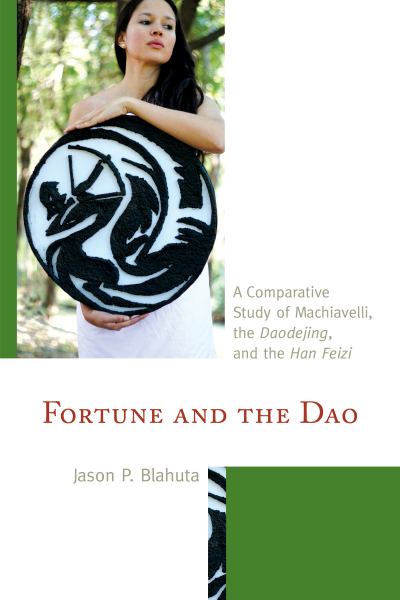
Fortune and the Dao
A Comparative Study of Machiavelli, the Daodejing, and the Han Feizi
Authors:
Publisher:
2015
Summary
Times of prolonged conflict spur great minds to seek a lasting peace. Thus was the case of Warring States China, which saw the rise of the Hundred Schools of Thought, including the Doadejing and the Han Feizi, and Renaissance Italy, which produced Niccolò Machiavelli. Witnessing their respective societies fall prey to internal corruption and external aggression, all three thinkers sought ways to produce a strong, stable state that would allow both the leader and the populace to endure. Fortune and the Dao: A Comparative Study of Machiavelli, the Daodejing, and the Han Feizi demonstrates where the shortcomings of each theory lie, with emphasis on the similarities among Machiavelli, Laozi, and Han Feizi. Jason P. Blahuta ultimately argues that if Machiavelli’s philosophy, the most comprehensive of the three theories, were supplemented by aspects of the Daodejing, the revision would potentially overcome the deficiencies of the original.
Search publication
Bibliographic data
Edition
1/2015
Copyright Year
2015
ISBN-Print
978-1-4985-0052-4
ISBN-Online
978-1-4985-0053-1
Publisher
Lexington, Lanham
Language
English
Pages
229
Product Type
Monograph
Table of contents
ChapterPages
Contents No access
Acknowledgments No access
Introduction No access Pages 1 - 28
1 Living in the Shadow of Conflict No access Pages 29 - 46
2 Fortune and the Dao No access Pages 47 - 96
3 The Centaur and the Dragon No access Pages 97 - 146
4 Machiavelli and the Han Feizi No access Pages 147 - 176
5 Machiavelli, Laozi, and Han Feizi No access Pages 177 - 212