, to see if you have full access to this publication.
Monograph No access
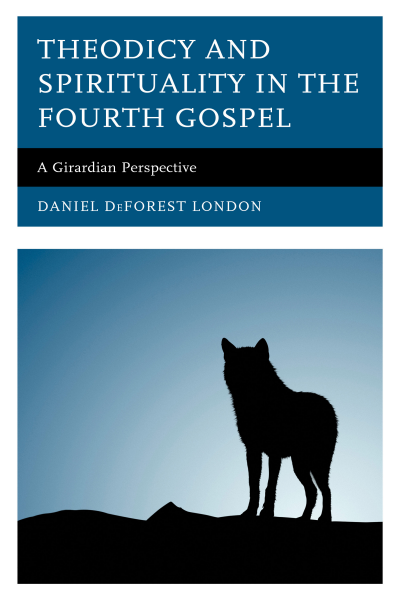
Theodicy and Spirituality in the Fourth Gospel
A Girardian Perspective
Authors:
Publisher:
2020
Summary
Daniel DeForest London argues that the Fourth Gospel offers a potentially transformative response to the question of suffering and the human compulsion to blame. Based on his reading of John 9 (the man born blind), London argues that the Gospel does not offer a theodicy, but rather a theodical spirituality, an experience of praying the question of suffering and remaining open to a divine response. London shows how the Johannine Jesus’s response poses three sets of symbols in dichotomy (day/night, vision/blindness, sheep/wolf), each subverted by another, core symbol (light, judge, shepherd). By interpreting these symbols in light of mimetic theory, he argues that Jesus’s response reveals the scapegoat mechanism in which an innocent victim is blamed by violent victimizers. However, rather than blaming the victimizers, Jesus continues to engage with the characters who appear to be villains: the light of the world transforms night and day into one continuous day; the Good Shepherd welcomes sheep and wolf into his beloved flock. In this way, readers are invited to bring to the Johannine Jesus their own violence, resentment, and wolfish rage regarding the question of suffering and to experience the theodical spirituality of the Fourth Gospel.
Keywords
Search publication
Bibliographic data
Edition
1/2020
Copyright Year
2020
ISBN-Print
978-1-9787-0240-0
ISBN-Online
978-1-9787-0241-7
Publisher
Lexington, Lanham
Language
English
Pages
134
Product Type
Monograph
Table of contents
ChapterPages
Contents No access
List of Figures No access
Acknowledgments No access
Introduction No access Pages 1 - 6
Chapter 1 Theodical Spirituality No access Pages 7 - 22
Chapter 2 Mimetic Theory and the Anthropological Tale of the Fourth Gospel No access Pages 23 - 38
Chapter 3 Blaming the Victim No access Pages 39 - 60
Chapter 4 Blaming the Victimizer No access Pages 61 - 82
Chapter 5 Blaming God No access Pages 83 - 110
Conclusion No access Pages 111 - 116
Bibliography No access Pages 117 - 128
Index No access Pages 129 - 132
About the Author No access Pages 133 - 134
Similar publications
from the topics "Religion und Theologie allgemein"