, to see if you have full access to this publication.
Monograph No access
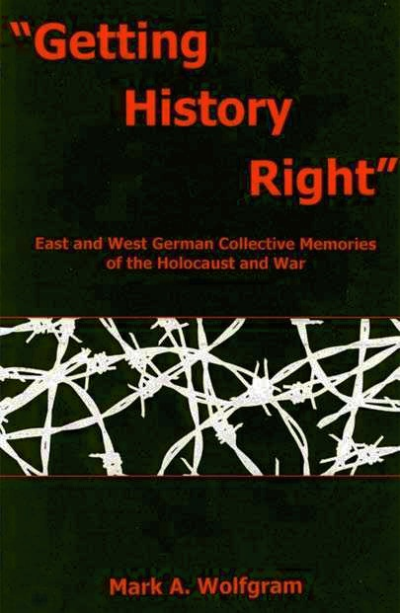
Getting History Right
East and West German Collective Memories of the Holocaust and War
Authors:
Publisher:
2010
Summary
How do individuals, societies, and nations deal with their difficult pasts? 'Getting History Right' examines this question in a comparative context by looking at an authoritarian East Germany and a pluralistic, democratic West Germany. Eschewing a narrow focus on elites, this work draws extensively on societal level discussions of the past in popular culture, such as film, television, radio, and newspapers. It examines how societal level discussions of the past shaped individual perceptions and interpretations of the past; and how individual perceptions and struggles over the meaning of the past shaped societal level discussions. These struggles over meaning and 'getting history right' are not only shaped by political power, but are also a source of symbolic power. To understand political life, scholars must embrace not only material political power, but also the symbolic and cultural roots of power. The research presented here makes extensive use of public opinion data, cinema attendance, and television viewer data, as well as other sources, to look at the multiple meanings that East and West Germans assigned to the Holocaust and World War II across time. Rather than culture merely being an extension of political power, this work argues that culture and the boundaries of the cultural matrix shape the use of political power by different social actors. Getting history right is not only a reflection of political power; it is a source of power itself.
Search publication
Bibliographic data
Edition
1/2010
Copyright Year
2010
ISBN-Print
978-1-61148-006-1
ISBN-Online
978-1-61148-007-8
Publisher
Lexington, Lanham
Language
English
Pages
294
Product Type
Monograph
Table of contents
ChapterPages
Contents No access
Acknowledgments No access
1. Collective Memory, Politics, and Culture No access Pages 13 - 31
2. Victims and Perpetrators: The View from the East No access Pages 32 - 58
3. Victims and Perpetrators: The View from the West No access Pages 59 - 105
4. Collaboration and Resistance: Blood and Redemption No access Pages 106 - 147
5. Division and Unity: A Revolutionary People Unites Itself No access Pages 148 - 175
6. Defeat and Liberation: Ending the War No access Pages 176 - 207
7. Conclusion—Mourning, Loss, and the Difficultyof Remembering No access Pages 208 - 216
Appendix: Charts and Chart Notes No access Pages 217 - 232