, to see if you have full access to this publication.
Monograph No access
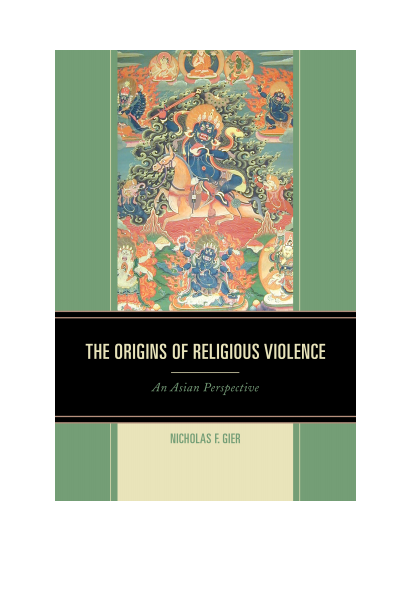
The Origins of Religious Violence
An Asian Perspective
Authors:
Publisher:
2014
Summary
Religiously motivated violence caused by the fusion of state and religion occurred in medieval Tibet and Bhutan and later in imperial Japan, but interfaith conflict also followed colonial incursions in India, Sri Lanka, and Burma. Before that time, there was a general premodern harmony among the resident religions of the latter countries, and only in the late nineteenth and twentieth centuries did religiously motivated violence break out. While conflict caused by Hindu fundamentalists has been serious and widespread, a combination of medieval Tibetan Buddhists and modern Sri Lankan, Japanese, and Burmese Buddhists has caused the most violence among the Asian religions. However, the Chinese Taiping Christians have the world record for the number of religious killings by one single sect. A theoretical investigation reveals that specific aspects of the Abrahamic religions—an insistence on the purity of revelation, a deity who intervenes in history, but one who still is primarily transcendent—may be primary causes of religious conflict. Only one factor—a mystical monism not favored in Judaism, Christianity, and Islam—was the basis of a distinctively Japanese Buddhist call for individuals to identify totally with the emperor and to wage war on behalf of a divine ruler. The Origins of Religious Violence: An Asian Perspective uses a methodological heuristic of premodern, modern, and constructive postmodern forms of thought to analyze causes and offer solutions to religious violence.
Keywords
Search publication
Bibliographic data
Edition
1/2014
Copyright Year
2014
ISBN-Print
978-0-7391-9222-1
ISBN-Online
978-0-7391-9223-8
Publisher
Lexington, Lanham
Language
English
Pages
295
Product Type
Monograph
Table of contents
ChapterPages
Contents No access
Acknowledgments No access
Introduction No access
1 From Mongols to Mughals No access Pages 1 - 24
2 Hindu Nationalism, Modernism, and Reverse Orientalism No access Pages 25 - 44
3 Premodern Harmony, Sri Lankan Buddhist Nationalism, and Violence No access Pages 45 - 66
4 Burmese Nationalisms and Religious Violence against Muslims No access Pages 67 - 96