, to see if you have full access to this publication.
Monograph No access
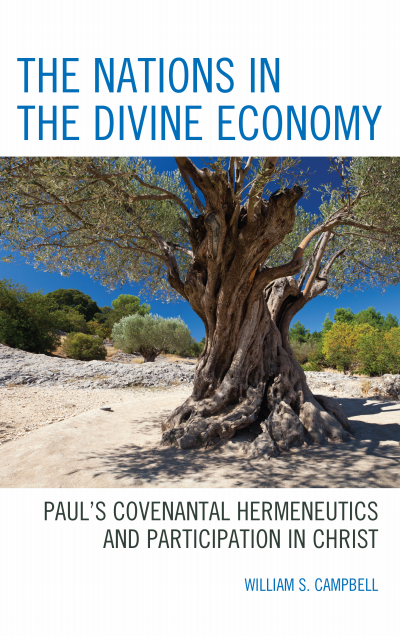
The Nations in the Divine Economy
Paul’s Covenantal Hermeneutics and Participation in Christ
Authors:
Publisher:
2018
Summary
Core to Paul's gospel is the relationship between Israel and the Nations in light of the coming of Christ. But historic Christianity, in claiming to be a new Israel, and in not recognising the purpose of God in Christ for Jews and the nations, has ignored its Jewish roots, the scriptures of Israel, and the Jewishness of Jesus and the apostles leaving a lacuna in its own identity, which Campbell argues, can only be overcome by a covenantal understanding of diversity in Christ. The denial of the covenant leads to a negation of God's revelation to Israel, and leaves Christianity with a deficient self-understanding.
Although covenant language is not prominent in Paul's letters it remains the basis of his thought in differentiated ways concerning Israel and the nations. The covenant remains God's covenant with Israel. But through the covenant re-ratified in Christ, non-Jews although not included in the covenant, participate through Christ in the Abrahamic promises. Hence participation language is prevalent in Paul's letters since these address non-Jews in Christ as representatives of the nations. Rather than being 'indifferent to difference', Paul's gospel is not anti-ethnic, but is focused on the continuation of difference in Christ. God's purpose is designed to relate to differing peoples, not in their becoming one and the same, but in reciprocal blessing among those who remain different. The corollary of this respect for difference is the call for reconciliation as an essential part of following Christ, a fundamental element in Paul's gospel. God created a diverse world so that his people will find blessing in its rainbow diversity.
Keywords
Search publication
Bibliographic data
Edition
1/2018
Copyright Year
2018
ISBN-Print
978-1-9787-0075-8
ISBN-Online
978-1-9787-0076-5
Publisher
Lexington, Lanham
Language
English
Pages
412
Product Type
Monograph
Table of contents
ChapterPages
Contents No access
Preface No access
Introduction No access
Chapter One: Reimagining the Period of Christian Origins No access Pages 18 - 49
Chapter Two: The Hermeneutics of Antithesis No access Pages 50 - 78
Chapter Three: Universality via Particularity No access Pages 79 - 103
Chapter Four: Association and Interaction with Judaism by Paul and His Communities No access Pages 104 - 127
Chapter Five: Paul and the Recognition of Ethnic Distinctiveness No access Pages 128 - 152
Chapter Six: The Hermeneutics of Commonality and Comparison in 2 Corinthians 3 No access Pages 153 - 192
Chapter Seven: The Faithfulness of God, the Remnant, and the Ethnē No access Pages 193 - 223
Chapter Eight: Ethnē in Christ and Their Relation to Israel No access Pages 224 - 254
Chapter Nine: Participation in Christ and the Transformation of Identity No access Pages 255 - 297
Chapter Ten: Covenantal Hermeneutics in Paul No access Pages 298 - 333
Conclusion No access Pages 334 - 353
Bibliography No access Pages 354 - 385
Index of Authors No access Pages 386 - 393
Index of Ancient Documents and Authors No access Pages 394 - 409
About the Author No access Pages 410 - 412
Similar publications
from the topics "Religion und Theologie allgemein"