, to see if you have full access to this publication.
Monograph No access
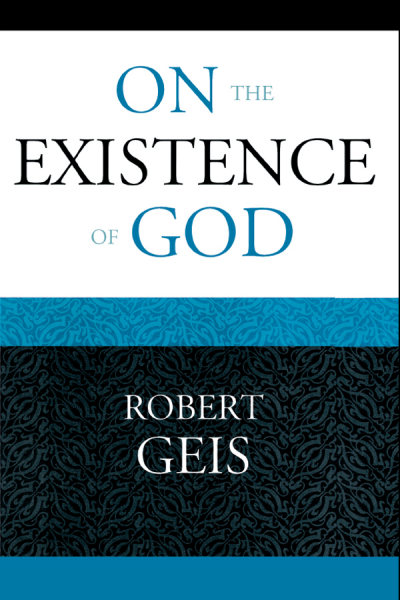
On the Existence of God
Authors:
Publisher:
2009
Summary
The existence of God raises many questions. Geis' work addresses queries that arise from the gratuitous claims of empiricism in Hume, unfounded assumptions in Kant, presumptions of science, and the improbabilities it identifies in Darwinism. By focusing on number and proportion as intrinsic to material and atomic constituency, any argument from chance as instrumental to the cosmos' emergence and sustainability becomes invalidated. The arguments from contingency and the nature of intellection provide more clarity than the ratio Anselmi for acknowledging a transcendent causality, taking the reader to the problem of evil and present-day nihilism. These concepts present great, but not insuperable, difficulty for theism. Geis argues that evil, when one uses it as a means to the betterment of oneself and the world, takes on the rTle commensurate with the doctrine of an omnibenevolent deity. Accordingly, one can use evil as a means to a greater understanding of God, Providence, and eternal destiny.
Search publication
Bibliographic data
Edition
1/2009
Copyright Year
2009
ISBN-Print
978-0-7618-4913-1
ISBN-Online
978-0-7618-4914-8
Publisher
Hamilton Books, Lanham
Language
English
Pages
225
Product Type
Monograph
Table of contents
ChapterPages
Table of Contents No access
Preface No access
Fallacies and Approaches to God No access Pages 1 - 14
Presumptions in Science No access Pages 15 - 38
Improbabilities and Darwinism No access Pages 39 - 66
Design and Order No access Pages 67 - 78
From Idea to Idea No access Pages 79 - 94
Mind as Dynamisme No access Pages 95 - 102
From the Causal Order No access Pages 103 - 122
Omnibenevolence and Evil No access Pages 123 - 134
Suffering, Nihilism, and the Divine No access Pages 135 - 146
Addressing Other Assumptions No access Pages 147 - 160
Afterword No access Pages 161 - 162
Notes No access Pages 163 - 216
Index No access Pages 217 - 224
About the Author No access Pages 225 - 225
Similar publications
from the topics "Religion und Theologie allgemein"