, to see if you have full access to this publication.
Edited Book No access
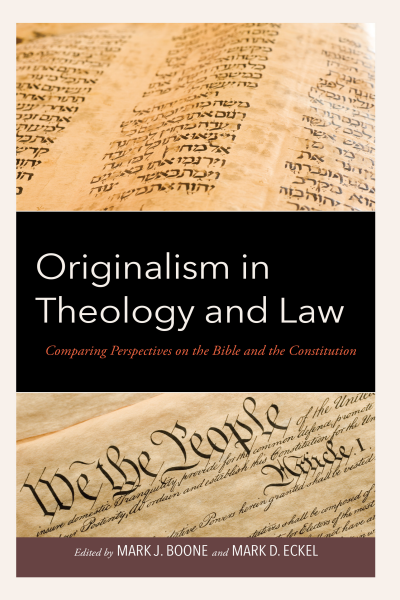
Originalism in Theology and Law
Comparing Perspectives on the Bible and the Constitution
Editors:
|
Publisher:
2024
Summary
In the study of American law, originalism is primarily a theory about the meaning of the Constitution—that its meaning can only change when its words change. Originalism also appears in biblical theology as a theory on the meaning of the Bible—that its meaning is that intended by the original authors. Originalism in Theology and Law: Comparing Perspectives on the Bible and the Constitution offers a study of originalism in both the Bible and the Constitution. While there are significant connections between originalism as a theory of biblical interpretation and as Constitutional interpretation, there are also differences in the type of text as well as its purpose, function, origins, or authority, which may affect which nuanced version of originalism best fits a particular text, or the best method of interpreting it.
Keywords
Search publication
Bibliographic data
Edition
1/2024
Copyright Year
2024
ISBN-Print
978-1-66693-212-6
ISBN-Online
978-1-6669-3213-3
Publisher
Lexington, Lanham
Language
English
Pages
234
Product Type
Edited Book
Table of contents
ChapterPages
Contents No access
The Scope of This Book No access
Which Originalist Theories Are We Dealing With? No access
The Thesis of This Book and Why It Matters No access
Why This Book? No access
And What Can We Learn? No access
Notes No access
Works Cited No access
Personal No access
Eternal No access
Triune No access
Creator No access
Revelator No access
Conclusion No access
Notes No access
Works Cited No access
Contextual Focus—Originalism and Hermeneutics No access
Contributional Focus—Aesthetics and Art No access
Intentionalism, Depiction, and Gestalt No access
A Few Forms of Denial and How to Deny Them No access
A Few Gleanings from the Comparison No access
Conclusion No access
Notes No access
Works Cited No access
The Oven of Akhnai No access
Akhnai, Constitutionalism, and the Torah No access
Living Originalism and the Oven of Akhnai No access
Talmudic Insights: Integrity and Living Originalism No access
Integrity and Interpretation: Future Work No access
Notes No access
Works Cited No access
The Current Discussion No access
Theory No access
Hypothesis No access
Dependent Variable: Constitutional Interpretation No access
Independent Variable: Literal Hermeneutic No access
Control Variables No access
Entries Are a Logistic Regression of Originalism No access
Conclusion No access
Notes No access
Works Cited No access
Originalism and Theological Crisis No access
Originalism in Transition No access
Luther: More Than “Lawyers’ Law” No access
Eisermann: Stability of Textual Meaning No access
Oldendorp: Equity as Ubiquitous No access
Interpretation and Proclamation No access
Notes toward a “Lutheran Originalism” No access
Notes No access
Works Cited No access
The Specter of Competing Originalisms No access
Originalism, Textualism, and Constructionism No access
Contrasts between Constitutional Originalism and Dispensational Literalism No access
Favorable Comparisons between Constitutional Originalism and Dispensational Literalism No access
Conclusion No access
Notes No access
Works Cited No access
Why Originalism? No access
Biblical Originalism No access
The Nature of the Bible No access
What Is Originalism in Law? No access
Who Can Interpret the Constitution? No access
The Nature of the Constitution No access
Conclusion No access
Notes No access
Works Cited No access
Textualism and the Pentateuch No access
The Case of the Two Alphabets No access
Ambiguity and Vagueness in the Pentateuch No access
Traduttore, Traditore No access
Conclusion No access
Notes No access
Works Cited No access
The Twin Pillars of Authority and Humanity for All Studies No access
Originalism in Authority, for Humanity No access
Authoritative Structural Concepts Established in Gen. 1:1–2:3 Theology No access
Original Sin in Humanity, Needing Intentional Authority No access
The Creation Order No access
The Cultural Mandate No access
The Rights of the Individual No access
The Responsibilities of the Individual No access
The Tension of the Ideal and the Real No access
Conclusion No access
Notes No access
Index No access Pages 227 - 230
About the Authors No access Pages 231 - 234
Similar publications
from the topics "Religion und Theologie allgemein"