, to see if you have full access to this publication.
Edited Book No access
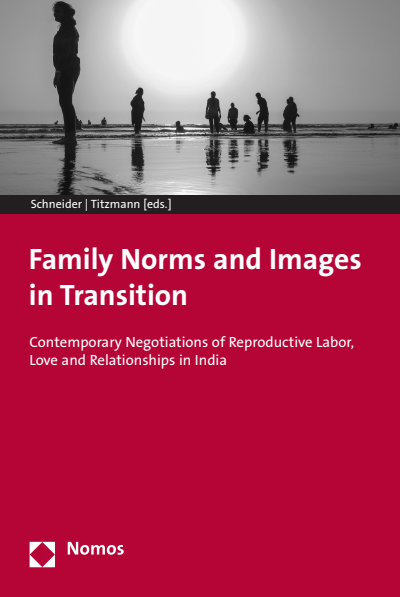
Family Norms and Images in Transition
Contemporary Negotiations of Reproductive Labor, Love and Relationships in India
Editors:
|
Publisher:
2020
Summary
In an ever-changing world, the family continues to simultaneously symbolise persistence and transformation. This book looks at various shifts, ruptures and continuities in representations of contemporary Indian families. How the media conveys family norms and images as well as the nature of romantic relationships constitutes the book’s central approach, which connects the different discussions in it. Its chapters analyse documentary and feature films, promotional material, such as television commercials, and the usage of new media technologies in communication. The authors look at visualisations of familial change, ranging from split motherhood, new fatherhood and dysfunctional families to intergenerational relationships, including the pre-marriage stage of life. Aimed at an interdisciplinary readership interested in South Asian, gender and media studies, this book thus contributes to our understanding of the current—ideological and ‘lived’—reality of an Indian family. With contributions byParul Bhandari, Nadja-Christina Schneider, Stefanie Strulik, Fritzi-Marie Titzmann
Search publication
Bibliographic data
Edition
1/2020
Copyright Year
2020
ISBN-Print
978-3-8487-5225-6
ISBN-Online
978-3-8452-9405-6
Publisher
Nomos, Baden-Baden
Language
English
Pages
113
Product Type
Edited Book
Table of contents
ChapterPages
Titelei/Inhaltsverzeichnis No access Pages 1 - 6
Introduction: Family Norms and Images in Transition. Contemporary Negotiations of Reproductive Labor, Love and Relationships in India No access Pages 7 - 10
Authors: |
Authors:
Introduction No access
Authors:
Towards 'New' Indian Fatherhood? No access
Authors:
The Ministry of Health and Family Welfare 2017 multimedia campaign No access
Authors:
Men in Crises and Selfies with Daughters No access
Authors:
Contested Notions of Gender Justice: #SelfieWithDaughter and 'real manhood' No access
Authors:
Conclusion No access
Authors:
References No access
Authors:
Authors:
Documentary Films as »Channels of Mediation« No access
Authors:
I. Translocal Circuits and Connectivities of Technologically Assisted Reproduction: »Google Baby« (2009) No access
Authors:
II. Intermedial References and Intertextual Borrowings: »The House of Surrogates« (2013) No access
Authors:
III. Living and Laboring Under a Panoptic Gaze No access
Authors:
IV. Framing Surrogacy as Labor vs. a Prevalent Rhetoric of »Rented Wombs« No access
Authors:
Outlook No access
Authors:
References No access
Authors:
Films No access
Authors:
Authors:
Introduction No access
Authors:
Authors:
Visualizing Split Parenthood - Negotiating Normative Motherhood and Kinship No access
Authors:
Authors:
Promoting 'Authentic Actors' - Authenticating the 'Documented Reality' in a Fictional Film No access
Authors:
Repro-Dramas as a Way of Translating Expertise Across Different Domains of Knowledge? No access
Authors:
Conclusion No access
Authors:
Authors:
Films No access
Authors:
Literature No access
Authors:
Authors:
Authors:
1.1 Struggles for the Family No access
Authors:
1.2 The Family as a Site of Patriarchy No access
Authors:
1.3 Re-integration of the Family No access
Authors:
Authors:
2.1 The 'Neoliberal' Middle Class No access
Authors:
2.2 Interpersonal Dynamics of Romance No access
Authors:
Authors:
3.1 The Mundane Setting of Discords No access
Authors:
3.2 Fraternal Frictions No access
Authors:
3.3 The Deceiving and Protecting Mother No access
Authors:
3.4 Sex and Sexuality No access
Authors:
Conclusion No access
Authors:
References No access
Authors:
Authors:
Why Muslim Middle Class? No access
Authors:
Negotiating Field Relations, Mutual Stereotypes and Trust No access
Authors:
Premarital Relationships No access
Authors:
Technological Change and Dating No access
Authors:
Physical Intimacy, »Just Friendship« and Cross-Communal Dating No access
Authors:
Processes of Distinction: Middleclassness and Dating No access
Authors:
Conclusion: Situative Plural Affiliations of Belonging No access
Authors:
References No access
Authors:
List of Contributors No access Pages 113 - 113
Similar publications
from the topics "Familiensoziologie & Jugendsoziologie"