, to see if you have full access to this publication.
Monograph Partial access
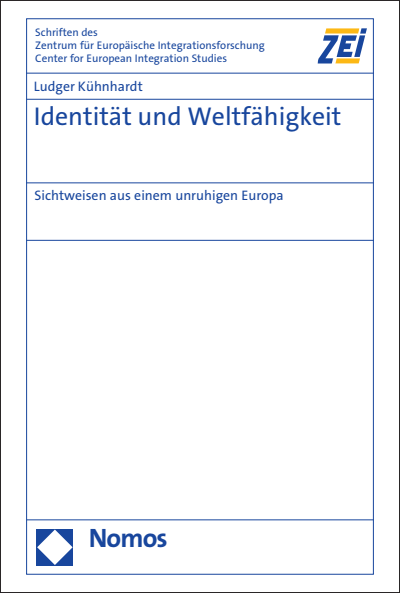
Identität und Weltfähigkeit
Sichtweisen aus einem unruhigen Europa- Authors:
- Series:
- Schriften des Zentrum für Europäische Integrationsforschung (ZEI), Volume 80
- Publisher:
- 2020
Search publication
Bibliographic data
- Edition
- 1/2020
- Copyright Year
- 2020
- ISBN-Print
- 978-3-8487-6303-0
- ISBN-Online
- 978-3-7489-0409-0
- Publisher
- Nomos, Baden-Baden
- Series
- Schriften des Zentrum für Europäische Integrationsforschung (ZEI)
- Volume
- 80
- Language
- German
- Pages
- 744
- Product Type
- Monograph
Table of contents
ChapterPages
- Titelei/Inhaltsverzeichnis Partial access Pages 1 - 10
- Ron Asmus: A significant life of two continents No access Pages 11 - 16
- Richard von Weizsäcker: Das Amt soll werden wie der Mensch No access Pages 17 - 24
- Karl Dietrich Bracher: Der die Geschichte kennt No access Pages 25 - 28
- Hans-Adolf Jacobsen: Militärisch für den Frieden No access Pages 29 - 32
- Hans-Peter Schwarz: Der konservative Anarchist No access Pages 33 - 36
- I. Political terminology as relational No access
- II. Theological roots of political theory No access
- III. The Lombardy experience No access
- IV. Taking subsidiarity seriously No access
- I. Erbe und Auftrag No access
- II. Baugesetz No access
- III. Entwicklungsgesetz No access
- IV. Anwendungen im gesellschaftlichen Raum No access
- V. Gegenseitige Verantwortung No access
- I. Die EU als Minderheitenkonstrukt No access
- II. Wahrheit, Mehrheit, Minderheiten No access
- III. Menschenrechte und Minderheitenschutz No access
- IV. Im Kern: die Menschenwürde No access
- I. Staatlicher Bezugsrahmen für Herrschaftsbegründung No access
- II. Spiegelverkehrte Ansätze des überstaatlichen politischen Denkens No access
- III. Eigenarten des europäischen politischen Vokabulars No access
- IV. Paradigmenwechsel No access
- I. Kontinent unterschiedlicher Rechtsräume No access
- II. Sonderentwicklung des Europarechts No access
- III. Rechtsprinzipien und Machtausgleich in der EU No access
- IV. Perspektiven inmitten von Krisenerscheinungen No access
- I. Begriffsabgrenzungen und Begriffszuordnungen No access
- II. Globalisierung: Interdependenz als weltweiter Prozess No access
- III. Globalität: Die Deutung des weltweiten Wandels No access
- IV. Folgen der Globalität für die europäische Wissenschaft No access
- I. Genese der Menschenrechtsidee und christliche Vorbehalte No access
- II. Weltweites Ringen um eine universale Menschenrechtsinterpretation No access
- III. Menschenrechte und Europaidee No access
- IV. Humanistische Appelle No access
- V. Begriffs-, Rechts- und Ordnungskonvergenzen No access
- I. Ursachen der Krisensymptome No access
- II. Konstruktionsdefizite No access
- III. Ablenkungsdebatte um die Transferunion No access
- IV. Gestaltungsauftrag des europäischen Regierens No access
- V. Selbstbehauptung als Chance No access
- I. Entscheidungsjahre und europäische Anforderungen No access
- II. Begriffsverschiebungen No access
- III. Rückkehr zur politischen Debatte No access
- IV. Ringen um die Ausgestaltung der genuinen europäischen Föderation No access
- I. Die Falle der Halbrepräsentation No access
- II. Webfehler ausbessern No access
- III. Europäische Souveränität herstellen No access
- I. Initiierung einer notwendigen Debatte No access
- II. Schwachstellen der europäischen Konstruktion beheben No access
- III. Bekannte Bekannte, unbekannte Bekannte und unbekannte Unbekannte No access
- IV. Der Zukunft zuarbeiten No access
- I. Die richtige Frage stellen No access
- II. Was dürfen wir hoffen? No access
- III. Europa ernst nehmen No access
- I. Begeisterung für die Normalität? No access
- 1. Sprache und Begriffe No access
- 2. Demokratie No access
- 3. Gesellschaftsbildung No access
- 4. Strategische Politisierung No access
- 5. Symbolpolitische Unterstützung der Normalität. No access
- III. Europa als Normalfall No access
- I. EU internal dynamics and the continuous struggle with cohesion No access
- II. Western Balkans and the European Union: a new beginning at last? No access
- III. The Western Balkans as provider of stability for the whole European Union? No access
- I. Systematisierung der Befunde No access
- II. Reformerfordernisse und Reformvoraussetzungen No access
- III. Europa, geeint und doch noch immer unversöhnt No access
- IV. Folgerungen für die deutsch-französischen Beziehungen No access
- V. European Way: Selbstbehauptung als Souveränitätskonzept No access
- I. Formative years, formative ideas No access
- II. Ambivalence and frustration No access
- III. A new chapter possible? No access
- I. Media and crisis No access
- II. Static versus dynamic analyses No access
- III. Sovereign debt crisis: Test case in trust and solidarity No access
- IV. Looking at limits or at opportunities? No access
- I. Past wars and current consequences No access
- II. Relations between Europe and Africa: a test-case No access
- III. Lessons today and lessons tomorrow No access
- I. Die Bedeutung von 1945 No access
- II. Die anhaltenden Folgen von 1989 No access
- III. Der ewige Friede als ewige Suche nach dem Frieden No access
- I. These 1: Freiheit, Sicherheit und Recht global denken No access
- II. These 2: Eine auswärtige Innenpolitik entwickeln No access
- I. Revolutionsanalysen im Vergleich No access
- II. Deutschland in Europa No access
- III. Die Labilität des Ordnungsraumes Europa No access
- IV. Die russische und die amerikanische Frage No access
- I. Erstarrung im Modus technokratischer Schadensbegrenzung No access
- II. Europa unter dem Druck der Welt No access
- III. Der Westen: Zukunftszweifel und Grenzen seiner Wirksamkeit No access
- IV. Die Rückkehr des Demokratieproblems No access
- V. Der Ausweg: Gesellschaftsbildung und Weltfähigkeit No access
- I. Stages of Europe’s peaceful revolution No access
- II. Feeling the pulse of Hungary – memories of four decades No access
- III. Conflicts in an era of “in-between” No access
- I. Menschenwürde und Staatsversagen No access
- II. Globalisierung der Analyse und Neudefinition von Entwicklung No access
- III. Auswärtige und innere Politik neu denken No access
- IV. Handlungsfähigkeit an den Grenzen und dahinter wiederherstellen No access
- V. Die legale Einwanderung leidet unter der illegalen Einwanderung No access
- VI. Die EU weitsichtiger neu denken No access
- I. Vorahnungen inmitten eines neuen Biedermeier No access
- II. Versäumnisse angesichts der globalen Wende No access
- III. Kontrollverlust und Schadensbegrenzung No access
- IV. Neue Schäden und verhaltene Ursachenbekämpfung No access
- V. Die EU erneuern: ohne „hard power“ ist „soft power“ bedroht No access
- I. Traditionslinien der Bonner Politikwissenschaft No access
- II. Die Bedeutung der Nord-Süd-Beziehungen No access
- III. Die neue Völkerwanderung nach Europa No access
- IV. Antworten und Lehren No access
- V. Das Vermächtnis No access
- I. Weltordnungsproblem Migration und Flucht No access
- II. Geschichtliche Einordnung No access
- III. Völkerwanderung und Krisenmanagement No access
- IV. Den Kontext ausleuchten No access
- I. Time for a strategic maturation No access
- II. Colonial and post-colonial legacies from Rome to Lomé No access
- III. Remnants of the Cold War: governance-issues and growing skepticism toward the West No access
- IV. Post-Cold War stalemate: Cotonou and Economic Partnership Agreements No access
- V. New realities and key actors: parameters until 2019 No access
- VI. The future (I): a stronger rationale and a wider thematic scope No access
- VII. The future (II): accommodating regional particularities No access
- VIII. The future (III): prioritizing UN Sustainable Development Goals No access
- IX. What to realistically expect from the EU-ACP negotiations ahead? No access
- I. ‚Mental map‘: Der Raumbegriff Europas No access
- II. Grenzbewusstsein und Grenzveränderungen No access
- III. Europa in einer unsicheren Welt: Neubewertung der Grenzfunktion No access
- IV. Weltmacht im Werden? Europas neue Raum- und Grenzerfahrung No access
- I. The EU proposal for negotiations: An assessment No access
- II. Advancing new thinking No access
- III. The Strategic Significance of the ACP-EU Partnership No access
- IV. Rethinking sovereignty No access
- I. Forming a strategic maritime interest of the EU: France takes the lead No access
- II. EU-OCT reality: Technical association management and strategic neglect No access
- III. The impact of Brexit on British overseas territories No access
- IV. OCTs: Between Europe’s post-colonial past and the EU’s geostrategic future No access
- V. The European archipelago: Transforming OCTs into the EU’s Outermost Regions No access
- I. Geopolitics revisited No access
- II. PESCO No access
- III. European sovereignty No access
- IV. Advancing global stability No access
- I. A call for the United States to rediscover its ideals No access
- II. A counterpoint: Germany’s exit from history No access
- I. How hereditary rulers should respond to popular pressure No access
- II. The historical fate of hereditary rule No access
- III. Key challenges for Arab Spring success No access
- IV. Transatlantic partners No access
- I. History as unpredictable new beginning No access
- II. Europe in face of three options No access
- III. Tunisia as test case for Europe as a community of values. No access
- IV. What is at stake for Europe No access
- I. Afghanistan: Success and failure of the past decade No access
- II. Transition in Afghanistan: Potential and constraints No access
- III. Transformation in Afghanistan: "We" and "they" or "we" and "us"? No access
- I. EU: From neighborhood policy to a global perspective No access
- II. Ukraine: Survival as a human right No access
- III. Eurasian Heartland or Atlantic Civilization No access
- IV. The roots of the Atlantic Civilization No access
- V. The Achilles heel of the West No access
- VI. Not Cold War II but Word War III? No access
- VII. What is to be done? No access
- I. From rhetoric to caricature No access
- II. New geopolitical thinking No access
- III. Priorities ahead No access
- IV. Whereto next? No access
- I. Überbietungswettbewerb um die Gunst Afrikas stoppen No access
- II. Afrikas „ownership“ stärken No access
- III. Trust territories: Wenn alles scheitert No access
- I. China with a strategy, the EU on its way to a strategy No access
- II. Geopolitics matters No access
- III. Trade requires regulation No access
- IV. Respecting third countries’ interests No access
- V. Every side loses with protectionism No access
- VI. Deepening cultural dialogue between the EU and China No access
- VII. Interdependency is no zero-sum game No access
- I. Contexte et focalisation No access
- II. Les phases historiques entre les continents voisins No access
- III. Conditions pour l'intégration régionale viable No access
- IV. Compromis, contrôle de soi et modération: le chemin vers l'avenir No access
- I. Regional integration as part of the post-2015 strategy No access
- II. Regional integration needs regulatory governance to succeed No access
- III. Finding the balance between nation-building and region-building No access
- IV. Democratic ownership matters No access
- V. New notions of development and property are needed No access
- I. Theories about regional integration No access
- II. Economic functionalism or regulatory governance No access
- III. Resilience through rule of law No access
- Nachweis der Beiträge No access Pages 733 - 742
- Autor No access Pages 743 - 744