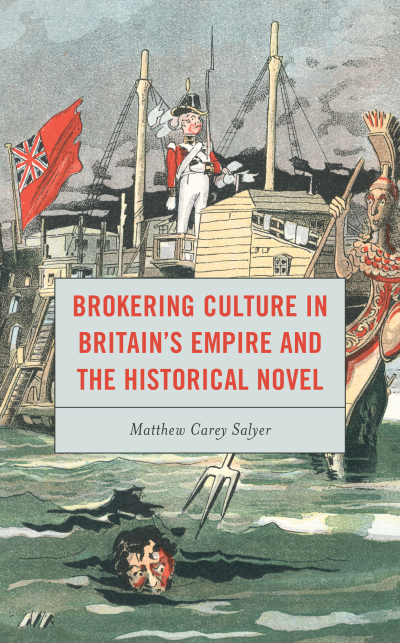
, to see if you have full access to this publication.
Monograph No access
Brokering Culture in Britain's Empire and the Historical Novel
Authors:
Publisher:
2020
Summary
Brokering Culture in Britain's Empire and the Historical Novel examines the relationship between the historical sensibilities of nineteenth-century British and American “romancers” and the conceptual frameworks that eighteenth-century imperial interlocutors used to imagine and critique their own experiences of Britain’s diffused, tenuous, and often accidental authority. Salyer argues that this cultural experience, more than what Lukács had in mind when he wrote of a mass historical consciousness after Napoleon, gave rise to the Romantic historiographical approach of writers such as Walter Scott, James Fenimore Cooper, Charles Brockden Brown and Frederick Marryat. This book traces the conversion of the eighteenth-century imperial speaker into the nineteenth-century “romance” hero through a number of proto-novelistic responses to the problem of Imperial history, including Edmund Burke in the Annual Register and the celebrated court case of James Annesley, among others. The author argues that popular Romantic novels such as Scott’s Waverley and Cooper’s The Pioneers convert the problem of narrating the political geographies of eighteenth-century Empire into a discourse of history, placing the historical realities of negotiating Imperial authority at the heart of a nineteenth-century project that fictionalized the possibilities and limits of political historical agency in the modern nation state.
Keywords
Search publication
Bibliographic data
Edition
1/2020
Copyright Year
2020
ISBN-Print
978-1-4985-6290-4
ISBN-Online
978-1-4985-6291-1
Publisher
Lexington, Lanham
Language
English
Pages
229
Product Type
Monograph
Table of contents
ChapterPages
Contents No access
Acknowledgments No access
Introduction No access Pages 1 - 18
Chapter One: “A little false geography” No access Pages 19 - 42
Chapter Two: “The empire of the father continues even after his death” No access Pages 43 - 74
Chapter Three: Still “Under Sir William” No access Pages 75 - 96
Chapter Four: “Revolution is a work of blood” No access Pages 97 - 116
Chapter Five: “Buried in their strange decay” No access Pages 117 - 150
Chapter Six: “Just as Government’s a mere matter of form” No access Pages 151 - 176