, to see if you have full access to this publication.
Monograph No access
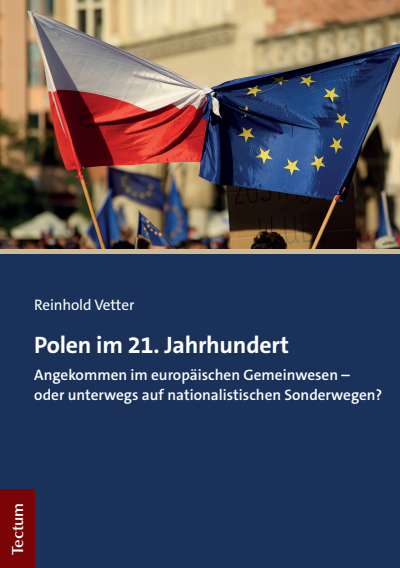
Polen im 21. Jahrhundert
Angekommen im europäischen Gemeinwesen – oder unterwegs auf nationalistischen Sonderwegen?
Authors:
Publisher:
2023
Summary
Since the beginning of Russia's war against Ukraine, the European public has also been looking at Poland. As Ukraine's direct neighbour, Poland plays an important role in providing aid to the troubled country. However, the domestic political development under Poland's national conservative government has been arousing concern across Europe since 2015. Time and again, there are conflicts between the EU and Poland's government. Reinhold Vetter examines the reasons and causes of this development by analysing the quality of the Polish constitution and political system, the strengths and weaknesses of the economy and social systems, Poland's position in the EU and NATO, and the attitude of its citizens towards parliamentary democracy.
Keywords
Search publication
Bibliographic data
Copyright Year
2023
ISBN-Print
978-3-8288-4825-2
ISBN-Online
978-3-8288-7940-9
Publisher
Tectum, Baden-Baden
Language
German
Pages
248
Product Type
Monograph
Table of contents
ChapterPages
Titelei/Inhaltsverzeichnis No access Pages I - VI
1 Einleitung No access Pages 1 - 4
2.1 Schmerzhafte Zäsur – Die Transformation von 1989/90 wirkt bis heute nach No access
2.2 Das Ende des Jalta-Systems – Der Nato-Beitritt 1999 No access
2.3 Westliches Exportprodukt – EU-Erweiterung 2004 No access
2.4 Was auf dem Spiel steht – Die deutsch-polnischen Beziehungen ab 1989 No access
2.5 Rollback – Die Nationalkonservativen übernehmen 2015 die Macht No access
2.6 Das Erfordernis neuer Strategien – Russlands Krieg gegen die Ukraine No access
3.1 Gefährdete Grundlage – Die Verfassung von 1997 No access
3.2 Geringes Ansehen des Parlaments – Sejm und Senat No access
3.3 Von Lech Wałęsa zu Andrzej Duda: Die Staatspräsidenten No access
3.4 Karussell der Regierungen – Tadeusz Mazowiecki hatte die schwierigste Aufgabe No access
Exkurs: „Lex Tusk“ No access
3.6 Konservative Dominanz – Relativ stabiles Parteiensystem No access
3.7 Schroffe Polemik, Korruption, Klientelismus – Die Schwächen der politischen Kultur No access
3.8 Nach vielen Erfolgen nun in der „Falle des mittleren Einkommens“ – Polnische Volkswirtschaft No access
3.9 Schwäche des Staates – Die Umweltpolitik No access
3.10 Prekariat auch in Polen – Strukturveränderungen in der Gesellschaft No access
3.11 Zwischen Befürwortung und Enttäuschung – Die Haltung der Bürger zur parlamentarischen Demokratie No access
3.12 Katholizismus im Wandel – Die Krise der katholischen Kirche No access
3.13 Vom liberalen Aufbruch zur nationalkonservativen Ausrichtung – Die Wissenschaft No access
4.1 Politische Paranoia – Die antideutsche Propaganda der polnischen Rechten No access
4.2 Die Mär vom „Superstaat“ – Frontstellung gegenüber der EU No access
4.3 Anerkanntes Mitglied – Polen in der Nato No access
5.1 Spaltung statt Zusammenführung – Nationalismus po polsku No access
5.2 Der PiS-Staat im Einsatz – Strategische Ausrichtung der staatlichen Geschichtspolitik No access
5.3 „Demokratie“ von oben – Autoritäre Regierungspraxis No access
5.4 Das „wahre Volk“ gegen die „unmoralischen Eliten“ – Populismus No access
6 Zusammenfassung No access Pages 207 - 216
1. Einleitung No access
2. Weichenstellung No access
3. Bilanz nach drei Jahrzehnten – Das staatlich-politische System, Wirtschaft, Gesellschaft No access
4. Polens heutige Position in Europa No access
5. Nationalismus, Autoritarismus, Populismus No access
Glossar: Institutionen, Parteien und andere Interessenvertretungen, Dokumente, Medien No access Pages 233 - 246