, to see if you have full access to this publication.
Monograph No access
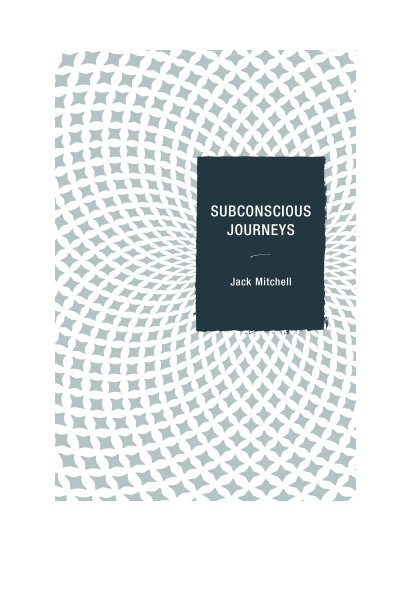
Subconscious Journeys
Authors:
Publisher:
2014
Summary
In Subconscious Journeys, Jack Mitchell explores the human mind and its connection to life, death, disease, and the probability of extended life. Most diseases, if not all, are formed and intensified through repressed fears that form emotional barriers within the subconscious mind. Lifestyles are then conscientiously directed and enforced within the conscious mind through the growing emotional needs of the personality. Subconscious Journeys is a study of the human mind. The mind is divided into four parts: the conscious, the subconscious, the conscience, and the personality. The conscious mind allows people to knowingly initiate outer body movements and make decisions. Unfortunately, age and strong emotions, augmented by repetitious repressed fears and traumas, alter what the conscious mind has control over in regards to reasoning ability. As a result, the repressions are stored within the subconscious and form emotional barriers that disrupt conscious activity. Another part of the mind, the conscience, controls the inner workings of various parts of the body such as the heart, spleen, liver, and so on. It speaks to us in dreams and frequently communicates to the conscious during traumatic situations. People can communicate with it during therapeutic sessions by using the primary hand and labeling the four fingers as “yes,” “no,” “maybe,” and “I won't answer.” When asked specific questions regarding their repressed fears and emotions, the conscience will respond with the involuntary movement of one of the four labeled fingers. The personality is formed mostly by the time individuals are about nine or ten years old. It is formed through fearful traumas, the emulation of loved ones’ behavior, and joyful experiences. Ultimately, Subconscious Journeys addresses how the four parts of the mind function and adapt as we deal with the inherent changes in life.
Keywords
Search publication
Bibliographic data
Edition
1/2014
Copyright Year
2014
ISBN-Print
978-0-7618-6333-5
ISBN-Online
978-0-7618-6334-2
Publisher
Hamilton Books, Lanham
Language
English
Pages
120
Product Type
Monograph
Table of contents
ChapterPages
Contents No access
Foreword No access
Preface No access
Introduction No access
1 The Human Mind No access Pages 1 - 6
2 The Subconscious Mind and You No access Pages 7 - 18
3 The Subconscious Mind and Neurosis No access Pages 19 - 32
4 The Subconscious Mind and Physical Changes No access Pages 33 - 40
5 The Subconscious Mind and Accidents No access Pages 41 - 46
6 The Subconscious Mind and Correctional and Mental Institutions No access Pages 47 - 52
7 The Subconscious Mind and Substance Dependences No access Pages 53 - 62
8 The Subconscious Mind and Vocations and Professions No access Pages 63 - 68
9 The Subconscious Mind and the Bodies’ Immune Systems No access Pages 69 - 72
10.1 Allergies, Asthma, Hay Fever and Hives No access
10.2 Emphysema No access
10.3 Cancer No access
10.4 Systemic Lupus No access
10.5 Psoriasis No access
10.6 Arthritis No access
10.7 Muscular Dystrophies No access
10.8 Myasthenia Gravis No access
10.9 Parkinson Disease No access
10.10 Cerebral Palsy No access
10.11 Multiple Sclerosis No access
10.12 Cystic Fibrosis No access
10.13 Psycho Motor Epilepsy No access
10.14 Cerebrovascular Accidents No access
10.15 Heart Disease No access
10.16 Hypertension No access
10.17 Heart Failure No access
10.18 Blood Clotting or Thrombosis No access
10.19 Strokes (Cerebral Vascular Accidents) No access
10.20 Aneurysms No access
10.21 Coronary Artery Spasms No access
10.22 Arrhythmias No access
10.23 Peptic Ulcers No access
10.24 Obesity No access
10.25 Diabetes Mellitus No access
10.26 Infectious Diseases No access
10.27 Acquired Immunity Deficiency Syndrome No access