, to see if you have full access to this publication.
Monograph No access
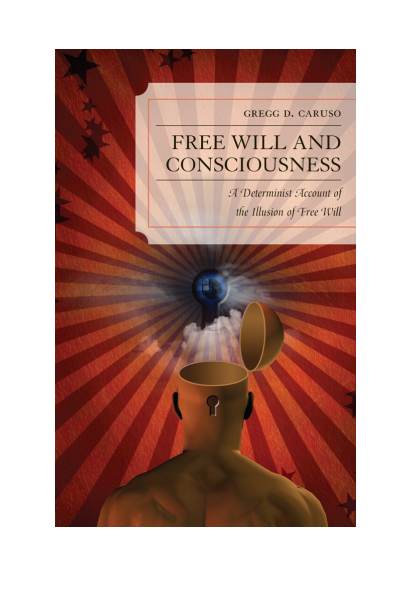
Free Will and Consciousness
A Determinist Account of the Illusion of Free Will
Authors:
Publisher:
2012
Summary
In recent decades, with advances in the behavioral, cognitive, and neurosciences, the idea that patterns of human behavior may ultimately be due to factors beyond our conscious control has increasingly gained traction and renewed interest in the age-old problem of free will. In this book, Gregg D. Caruso examines both the traditional philosophical problems long associated with the question of free will, such as the relationship between determinism and free will, as well as recent experimental and theoretical work directly related to consciousness and human agency. He argues that our best scientific theories indeed have the consequence that factors beyond our control produce all of the actions we perform and that because of this we do not possess the kind of free will required for genuine or ultimate responsibility. It is further argued that the strong and pervasive belief in free will, which the author considers an illusion, can be accounted for through a careful analysis of our phenomenology and a proper theoretical understanding of consciousness. Indeed, the primary goal of this book is to argue that our subjective feeling of freedom, as reflected in the first-person phenomenology of agentive experience, is an illusion created by certain aspects of our consciousness.
Keywords
Search publication
Bibliographic data
Edition
1/2012
Copyright Year
2012
ISBN-Print
978-0-7391-7136-3
ISBN-Online
978-0-7391-7137-0
Publisher
Lexington, Lanham
Language
English
Pages
301
Product Type
Monograph
Table of contents
ChapterPages
Contents No access
Acknowledgments No access
1.1 Hard-Enough Determinism and the Illusion of Free Will No access
1.2 Freedom and Determinism: Defining the Problem No access
1.3 A Word About Moral Responsibility No access
Notes No access
2.1 Agent-Causal Accounts of Free Will No access
2.2 The Problem of Mental Causation No access
2.3 Naturalized Libertarianism: Is Anyone Up For a Role of the Dice? No access
Notes No access
3.1 Compatibilism and the Consequence Argument No access
3.2 The Folk Psychology of Free Will No access
3.3 The Phenomenology of Freedom No access
Notes No access
4.1 Is Consciousness Necessary for Free Will? No access
4.2 Automaticity and the Adaptive Unconscious No access
4.3 The Unbearable Automaticity of Being No access
4.4 Implications for Free Will No access
Notes No access
5.1 Consciousness and Freedom: The Introspective Argument for Free Will No access
5.2 Two Concepts of Consciousness No access
5.3 The Higher-Order Thought (HOT) Theory of Consciousness No access
5.4 Misrepresentation and Confabulation No access
5.5 What the HOT Theory Tells Us About Free Will No access
5.6 On the Function of Consciousness No access
Notes No access
6.1 The Apparent Spontaneity of Intentional States No access
6.2 The Asymmetry Between Intentional States and Sensory States No access
6.3 Do Our Conscious Intentions Cause Our Actions? No access
6.4 Libet’s Findings and the HOT Theory No access
6.5 Explaining the Phenomenological Illusion No access
6.6 Wegner’s Theory of Apparent Mental Causation No access
Notes No access
7.1 When Self-Consciousness Breaks Down No access
7.2 Self-Consciousness and Higher-Order Thoughts No access
7.3 Errors of Identification, Thought Insertion, and the HOT Theory No access