, to see if you have full access to this publication.
Monograph No access
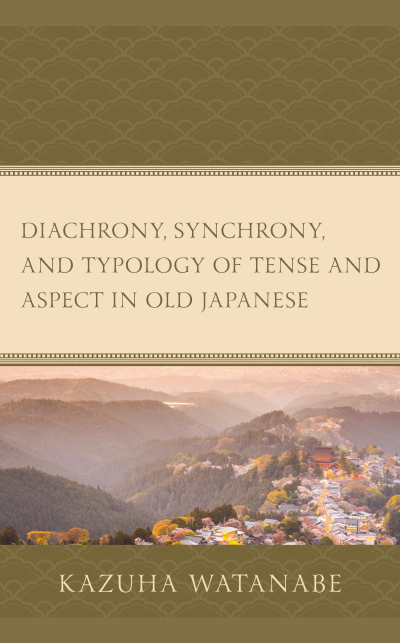
Diachrony, Synchrony, and Typology of Tense and Aspect in Old Japanese
Authors:
Publisher:
2021
Summary
Diachrony, Synchrony, and Typology of Tense and Aspect in Old Japanese reconstructs the synchronic system of tense and aspect in Old Japanese, which until now had not been examined using the tools of contemporary linguistic theory. Kazuha Watanabe analyzes syntactic distribution of the temporal suffixes in the Man'yōshū, an eighth-century poetry collection, and compares the results with data from well-attested languages. The author then integrates the semantic property of each suffix into the overall synchronic tense-aspect system of Old Japanese. Watanabe further compares the reconstructed system with the distributions of the same suffixes in Early Modern Japanese using Genji Monogatari, an eleventh-century novel, in order to provide further support for the synchronic analysis of Old Japanese. This approach is fundamentally different from traditional analyses, which identify the meanings of the temporal suffixes based on contextual information. In addition, previous analyses have produced a uniform analysis covering the entire 700-year period from Old to Early Modern Japanese. Instead, Watanabe proposes that Old Japanese had a temporal system distinct from the later period.
Search publication
Bibliographic data
Edition
1/2021
Copyright Year
2021
ISBN-Print
978-1-7936-1442-1
ISBN-Online
978-1-7936-1443-8
Publisher
Lexington, Lanham
Language
English
Pages
202
Product Type
Monograph
Table of contents
ChapterPages
Contents No access
Introduction No access Pages 1 - 6
1. Tense and Aspect No access Pages 7 - 42
2. –(ye)ri, –kyeri, and –ki No access Pages 43 - 106
3. –tu and –nu No access Pages 107 - 132
4. –tari and other emerging markers No access Pages 133 - 162