, to see if you have full access to this publication.
Monograph No access
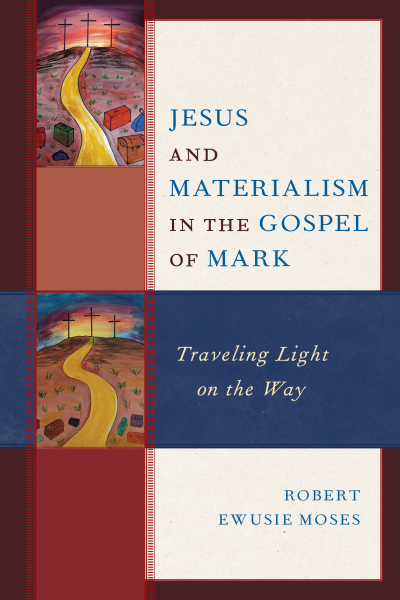
Jesus and Materialism in the Gospel of Mark
Traveling Light on the Way
Authors:
Publisher:
2022
Summary
The Gospel of Mark presents Jesus’ ministry and mission as a journey on “the way,” a journey to Jerusalem that ultimately results in his suffering and crucifixion. On the journey to the cross, Jesus embodies that which is least, vulnerable, and destitute in society, and he invites his followers to journey with him on the way. Robert Ewusie Moses argues that this invitation to discipleship is a call for believers to reassess their relationship with material possessions and their desire for wealth and power. Like Jesus, believers are to travel light on the way, for holding on strongly to possessions can be a hindrance for the journey. To embrace those in society who are least, vulnerable, and destitute is to embrace Jesus himself and the God who sent him. Traveling light on the way requires believers to place their trust in God, to depend on God to provide their needs. Moses shows that the journey is by its very nature a rejection of the status quo; it demands followers of Jesus to shun greed and the amassing of superfluous possessions that the world encourages. The book demonstrates that to be on this journey is to commit to the creation of communities of care, where those like Jesus—poor, vulnerable, and marginalized—are welcomed and cared for.
Keywords
Search publication
Bibliographic data
Edition
1/2022
Copyright Year
2022
ISBN-Print
978-1-9787-0093-2
ISBN-Online
978-1-9787-0094-9
Publisher
Lexington, Lanham
Language
English
Pages
266
Product Type
Monograph
Table of contents
ChapterPages
Dedication No access
Contents No access
Preface No access
The Way of the Lord versus the Way of the World No access Pages 1 - 26
Part 1 of Mark (Chapters 1–8) No access Pages 27 - 28
Trust in God and Dependency on God No access Pages 29 - 58
Good News for the Poor No access Pages 59 - 90
The Cost of Discipleship and the Status Quo No access
Warnings against Greed and Care for the Marginalized No access
Conclusion No access
Appendix No access Pages 197 - 216
Bibliography No access Pages 217 - 236
Index of Authors No access Pages 237 - 242
Index of Scripture and Ancient Authors No access Pages 243 - 264
About the Author No access Pages 265 - 266
Similar publications
from the topics "Religion und Theologie allgemein"
Edited Book No access
Jan Hermelink, Alexander Deeg, Michael Domsgen, Kristin Merle, Marcell Saß