, to see if you have full access to this publication.
Monograph No access
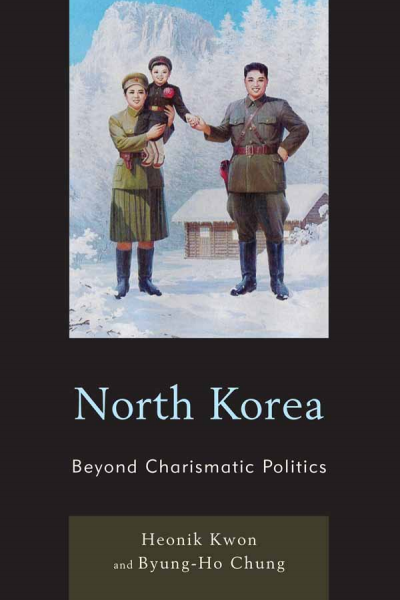
North Korea
Beyond Charismatic Politics
Authors:
|
Publisher:
2012
Summary
This timely, pathbreaking study of North Korea’s political history and culture sheds invaluable light on the country’s unique leadership continuity and succession. Leading scholars Heonik Kwon and Byung-Ho Chung begin by tracing Kim Il Sung’s rise to power during the Cold War. They show how his successor, his eldest son, Kim Jong Il, sponsored the production of revolutionary art to unleash a public political culture that would consolidate Kim’s charismatic power and his own hereditary authority. The result was the birth of a powerful modern theater state that sustains North Korean leaders’ sovereignty now to a third generation. In defiance of the instability to which so many revolutionary states eventually succumb, the durability of charismatic politics in North Korea defines its exceptional place in modern history.
Kwon and Chung make an innovative contribution to comparative socialism and postsocialism as well as to the anthropology of the state. Their pioneering work is essential for all readers interested in understanding North Korea’s past and future, the destiny of charismatic power in modern politics, the role of art in enabling this power.
Keywords
Search publication
Bibliographic data
Copyright Year
2012
ISBN-Print
978-0-7425-5679-9
ISBN-Online
978-1-4422-1577-1
Publisher
Rowman & Littlefield, Lanham
Language
English
Pages
220
Product Type
Monograph
Table of contents
ChapterPages
Contents No access
Illustrations No access
Acknowledgments No access
Introduction No access Pages 1 - 8
1 The Great National Bereavement, 1994 No access Pages 9 - 42
2 The Modern Theater State No access Pages 43 - 70
3 The Barrel of a Gun No access Pages 71 - 100
4 The Graves of Revolutionary Martyrs No access Pages 101 - 126