, to see if you have full access to this publication.
Edited Book No access
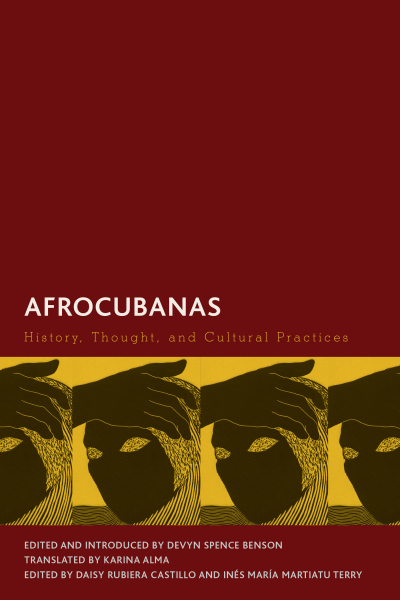
Afrocubanas
History, Thought, and Cultural Practices
Editors:
| |
Publisher:
2020
Summary
Originally published in Spanish and edited by Cuban historian Daisy Rubiera Castillo and playwright and theater critic Inés María Martiatu Terry, this ground-breaking edited collection is the first work of its kind. It places the experiences of black and mulata women at the center of Cuban history. Including essays from a mix of well-known and newly published Cuban authors, the volume examines the lives of Afrocubanas from the late nineteenth century to the present. The volume’s contributors collect and interrogate the voices of black Cuban women and the political, cultural, social, and ideological contributions they have made to the history of their nation.
One of the unique qualities of Afrocubanas is that the text is the product of a grassroots community working group in Havana. A number of antiracist organizations emerged to fight racial inequality in light of Cuba’s new economic challenges after the fall of its chief trading partner, the Soviet Union in 1991. But, the Afrocubanas Project (founded in the mid-2000s) is one of the few groups that challenges racism and sexism together. The members of the Afrocubanas Project hail from a variety of professions, ages, and sexual orientations. They share a collective interest in challenging negative stereotypes about black women. This volume merges their activism and scholarship to offer a counter discourse to existing narratives about black women in Cuba while also creating and disseminating new knowledge about Afrocubanas.
There is no other published work in English devoted to analyzing the political and intellectual dimensions of black Cuban women’s thought across the island’s history. This text is essential reading for scholars and students of Africana Studies, Afro-Latin American Studies, Caribbean history, and courses focusing on black women in the Atlantic region.
Keywords
Search publication
Bibliographic data
Edition
1/2020
Copyright Year
2020
ISBN-Print
978-1-78661-481-0
ISBN-Online
978-1-78661-482-7
Publisher
Rowman & Littlefield, Lanham
Language
English
Pages
356
Product Type
Edited Book
Table of contents
ChapterPages
Dedication Page No access
Contents No access
Acknowledgments No access
Editor’s Acknowledgments No access
Editor’s Introduction No access
Translator’s Note No access
Prologue No access
Notes No access
Chapter 1 Lawsuits by Slave Women in Nineteenth-Century Cuba No access
Chapter 2 Reconstructing Ex-Slave Belén Álvarez’s Story No access
Chapter 3 Women “of Color” in Santiaguera Colonial Society No access
Chapter 4 Women of Minerva No access
Chapter 5 Gratitude No access
Chapter 6 Black Voices in Favor of the Independent Party of Color1 No access
Chapter 7 Our Ethnic Values1 No access
Chapter 8 What We Are No access
Chapter 9 The Black Cuban Woman No access
Chapter 10 The Black Cuban Women and Culture No access
Chapter 11 Black Intelligence No access
Chapter 12 Women in Santeria or Regla Ocha No access
Chapter 13 Gender and Raciality No access
Chapter 14 On Afrocubana Stereotypes No access
Chapter 15 Proposing an Inclusive and Nonsexist Gaze No access
Chapter 16 Hairs No access
Chapter 17 Passing for a White Woman No access
Chapter 18 The Revolution Made Blacks into People No access
Chapter 19 Human Race? Ah . . . It Had to Be! No access
Chapter 20 A Room of Our Own for Black Cuban Women No access
Chapter 21 Oriki for Elder Black Women of the Past No access
Chapter 22 The Black Female Imaginary in Cuba No access
Chapter 23 Contradictory Binaries in Nancy Morejón’s Octubre Imprescindible and Cuaderno de Granada No access
Chapter 24 In Memory of Excilia No access
Chapter 25 The Thick Skin of Teresa Cárdenas No access
Chapter 26 El Negrito and the Mulata in the Vortex of Nationality No access
Chapter 27 Popular Theater and Collective Resistance No access
Chapter 28 Catalina Berroa, the Audacious Trinidadian No access
Chapter 29 The Marathon Exists for Both Men and Women No access
Chapter 30 Making One’s Dreams Come True Is Not the Same as Dreaming No access
Chapter 31 The Contributions of Sara Gómez No access
Chapter 32 Belkis Ayón Manso, Between Heterogeneous Sensibilities No access
Chapter 33 Black Women in Sports No access
Chapter 34 A Lexical Semantical Analysis on the Discourse of Women in Cuban Rap No access
Index No access Pages 333 - 346
About the Editor and Translator No access Pages 347 - 348