, to see if you have full access to this publication.
Monograph No access
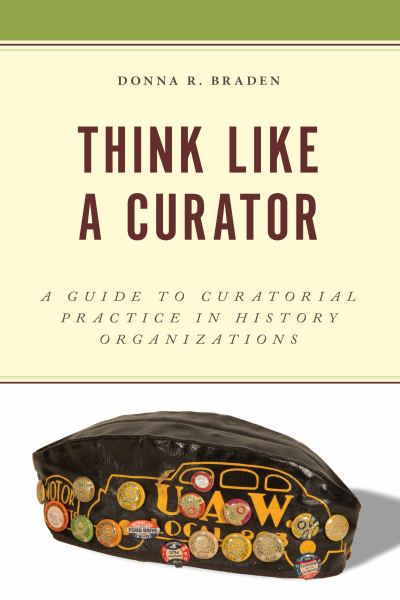
Think Like a Curator
A Guide to Curatorial Practice in History Organizations- Authors:
- Publisher:
- 2025
Keywords
Search publication
Bibliographic data
- Edition
- 1/2025
- Copyright Year
- 2025
- ISBN-Print
- 978-1-5381-8280-2
- ISBN-Online
- 978-1-5381-8282-6
- Publisher
- Rowman & Littlefield, Lanham
- Language
- English
- Pages
- 280
- Product Type
- Monograph
Table of contents
ChapterPages
- Contents No access
- Preface No access
- Acknowledgments No access
- Chapter Descriptions No access
- Defining Museum Curators No access
- Curator Core Competencies No access
- Specialist Curators No access
- Generalist Curators No access
- History Curators at Small Museums No access
- Curators at Outdoor Museums and Historic Sites No access
- Guest Curators No access
- Community Co-Curators No access
- History Relevance Initiative No access
- DEAI (Diversity, Equity, Accessibility, and Inclusion) Perspectives No access
- Checking In with Museum Audiences No access
- So You Want to Be a History Museum Curator No access
- Mastering Competencies, Growing New Skills No access
- Ongoing Assessment No access
- Reflective Practice No access
- What Is Material Culture? No access
- Why Study Material Culture? No access
- “Manufacts” (1950s to 1960s) No access
- “History from the Bottom Up” (late 1960s to 1980s) No access
- Material Culture Studies (1980s to the present) No access
- Digital Transformation (1990s to the present) No access
- “Active” and Inclusive Objects (about 2012 to the present) No access
- “Artifact Study: A Proposed Model” No access
- Six Practical Steps No access
- Examples of Object Studies No access
- What Is Going On Here? No access
- Reflective Practice No access
- What Do Curators Bring to Collections Work? No access
- Collections: Essential, Ethical, Mission-Aligned No access
- Too Much Stuff No access
- Not Enough of the “Right” Stuff No access
- A Collections Management Policy No access
- The Collections Plan No access
- Community-Based Collecting No access
- Contemporary and Rapid Response Collecting No access
- Acquisitions No access
- Cataloging No access
- Deaccessioning No access
- Tiering/Ranking Collections No access
- Repatriation No access
- Mission and Public Trust No access
- Collections Planning No access
- Collections Fundamentals No access
- Inclusive Collecting No access
- Public History in Museums No access
- Asking Questions No access
- Identifying and Analyzing Sources No access
- Interpreting the Evidence No access
- Online Research No access
- Secondary Sources: Published Books and Articles No access
- Secondary Sources: Graduate Theses and Dissertations No access
- Primary Sources: A General Overview No access
- Primary Sources: Published Primary Documents No access
- Primary Sources: Unpublished Primary Documents No access
- Visual Documents and Media Sources No access
- Oral Histories No access
- Objects as Evidence No access
- Physical Structures and Historic Landscapes as Primary Documents No access
- Enslaved Africans/African Americans No access
- Women No access
- LGBTQ+ History No access
- Getting Started: Suggested Research Steps No access
- Pushback Strategies No access
- Why Historical Thinking Matters No access
- Reflective Practice No access
- In Public Spaces No access
- With the Public No access
- For the Public No access
- Stories and Storytelling in Exhibitions No access
- Teamwork and Collaboration No access
- Initial Planning31 No access
- From Design to Installation, and Beyond No access
- Visitors’ Label-Reading Behaviors No access
- Tips for Writing Effective Labels No access
- Labels That Tell Stories No access
- Testing (Prototyping) Labels No access
- Resonance No access
- Empathy No access
- Call to Action No access
- Refinements to the Exhibition Process No access
- Heart Mountain Interpretive Center, Powell, Wyoming56 No access
- “Native New York” Gallery, The Smithsonian’s National Museum of the American Indian, New York City57 No access
- “Finding Our Voice: Sister Survivors Speak,” MSU Museum, Lansing, Michigan59 No access
- Cellblock 4, Eastern State Penitentiary, Philadelphia, Pennsylvania61 No access
- “The Power of Children: Making a Difference” Exhibition, The Children’s Museum of Indianapolis, Indianapolis, Indiana62 No access
- TENACITY: Women in Jamestown and Early Virginia, Jamestown Settlement, Virginia63 No access
- “A Monumental Weight: The Auction Block in Fredericksburg, Virginia”64 No access
- “Mimi’s Family: Photographs of Matthew Clowney,” Boston Children’s Museum, Boston, Massachusetts65 No access
- “Chinese Medicine in America: Converging Ideas, People, and Practices,” The Museum of the Chinese in America, Chinatown, New York City66 No access
- “The Sand Creek Massacre: The Betrayal that Changed Cheyenne and Arapaho People Forever,” History Colorado, Denver, Colorado67 No access
- “‘¡NUEVOlution!’ Latinos and the New South,” Levine Museum of the New South, Charlotte, North Carolina69 No access
- “WINIKO: Life of an Object,” First Americans Museum, Oklahoma City, Oklahoma70 No access
- Getting to Know Visitors No access
- Exhibition Roles and Process No access
- Writing Labels No access
- Exhibitions in Today’s World No access
- What Is Interpretation? No access
- Issue #1: The Sustainability of Historic House Museums No access
- Issue #2: Uncovering and Interpreting Previously Untold Stories No access
- Issue #3: The Power of Historic House Museums over Visitors No access
- The Interpretive Framework No access
- Furnishings Rationale and Inventory No access
- Props and Reproductions No access
- Layout, Installation, and Accessibility No access
- Interpretive Staff No access
- Self-Guided Experiences No access
- Exhibitions and Interactives No access
- Interpretive Signs and Labels No access
- Theatrical Performances No access
- Public and Educational Programs No access
- Offerings for Audiences with Special Needs No access
- Auxiliary Interpretive Products No access
- Training and Interpretive Manuals No access
- Immediate Adjustments and Ongoing Refinements No access
- Real-Life Examples No access
- Reflective Practice No access
- Links to Curator Core Competencies No access
- The Public History Connection No access
- Printed Materials No access
- Writing for Online Audiences No access
- Digitized Collections No access
- Online Exhibitions No access
- Blogs (Online Articles) No access
- Other Website Content No access
- Writing for Social Media No access
- Audiences for Talks and Tours No access
- Preparing the Talk No access
- Delivering the Talk No access
- Preparing the Tour No access
- Delivering the Tour No access
- Preparing an Online Talk No access
- Delivering an Online Talk No access
- Audio Tours No access
- Talks and Tours for People with Disabilities—A Unique Opportunity No access
- Preparing for the Interview No access
- Giving the Interview No access
- Cautions/Challenges and Strategies No access
- Podcasts No access
- Wrap-Up No access
- Leading at Every Level No access
- Key Factor #1: People No access
- Key Factor #2: Organizational Culture No access
- Tools for Self-Leadership No access
- Challenges No access
- Tools for Leading Up No access
- Leading Other Senior Leaders No access
- Challenges No access
- Tools for Leading Across No access
- Challenges No access
- Tools for Mentoring No access
- Leading Down: When You Are the Boss No access
- Challenges No access
- Tools for Leading Direct Reports No access
- Tools for Leading the Entire Team Include: No access
- Leading Yourself No access
- Leading Across No access
- Challenges No access
- Conclusion No access
- Preface No access
- Chapter 1 No access
- Chapter 2 No access
- Chapter 3 No access
- Chapter 4 No access
- Chapter 5 No access
- Chapter 6 No access
- Chapter 7 No access
- Chapter 8 No access
- Bibliography No access Pages 245 - 270
- Index No access Pages 271 - 278
- About the Author No access Pages 279 - 280