, to see if you have full access to this publication.
Monograph No access
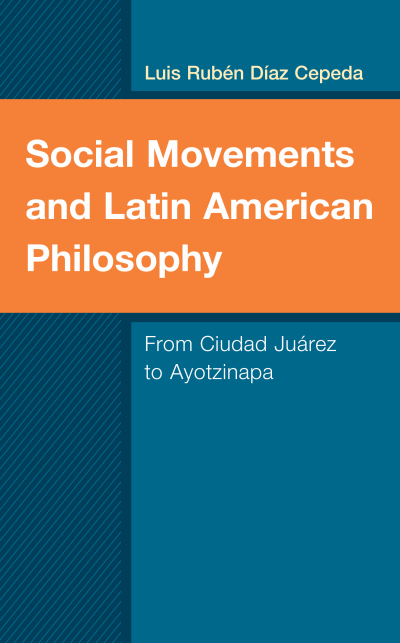
Social Movements and Latin American Philosophy
From Ciudad Juárez to Ayotzinapa
Authors:
Publisher:
2020
Summary
Social Movements and Latin American Philosophy: From Ciudad Juarez to Ayotzinapa provides a historical and theoretical analysis of the Ayotzinapa social movement from the perspective of Latin American philosophy to provide a deeper understanding of the challenges that social movements face in the context of extreme violence. Luis Rubén Díaz Cepeda analyzes the complete cycle of mobilization appertaining to Ciudad Juárez, the Movement for Peace with Justice and Dignity, and the Ayotzinapa social movement. Guided by the theories of Enrique Dussel, Boaventura de Sousa Santos, Ernesto Laclau, and Santiago Castro-Gomez, Díaz Cepeda addresses questions of how a social movement is born, how the distinct social movement organizations should articulate to form a movement of movements, what (if at all) the limits and extent of these organizations should be. In raising and addressing such questions, Díaz Cepeda argues in favor of a soft articulation and the perennial need for social movement organizations. Scholars of Latin American studies, philosophy, history, and sociology will find this book particularly useful.
Keywords
Search publication
Bibliographic data
Edition
1/2020
Copyright Year
2020
ISBN-Print
978-1-4985-6053-5
ISBN-Online
978-1-4985-6054-2
Publisher
Lexington, Lanham
Language
English
Pages
135
Product Type
Monograph
Table of contents
ChapterPages
Contents No access
Foreword No access
Acknowledgments No access
Introduction No access
1 Ciudad Juárez No access Pages 1 - 18
2 Movement for Peace with Justice and Dignity No access Pages 19 - 36