, to see if you have full access to this publication.
Edited Book No access
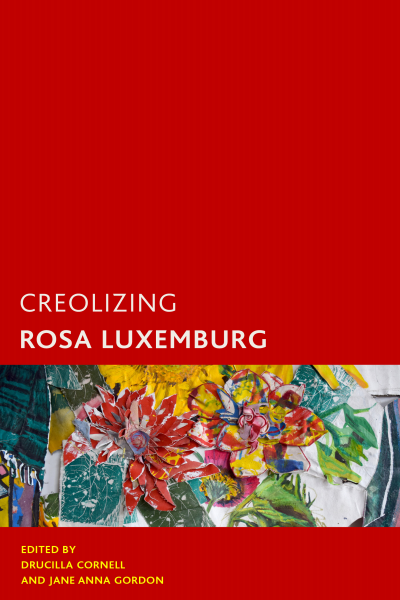
Creolizing Rosa Luxemburg
Editors:
|
Publisher:
2021
Summary
Rosa Luxemburg is unquestionably the most important historical European woman Marxist theorist. Significantly, for the purpose of creolizing the canon, she considered her continent and the globe from an Eastern Europe that was in constant flux and turmoil. From this relatively peripheral location, she was far less parochial than many of her more centrally located interlocutors and peers. Indeed, Luxemburg’s work touched on all the burning issues of her time and ours, from analysis of concrete revolutionary struggles, such as those in Poland and Russia, to showing through her analysis of primitive accumulation that anti-capitalist and anti-colonial struggles had to be intertwined, to considerations of state sovereignty, democracy, feminism, and racism. She thereby offered reflections that can usefully be taken up and reworked by writers facing continuous and new challenges to undo relations of exploitation through radical economic and social transformation Luxemburg touches on all aspects of what constitutes revolution in her work; the authors of this volume show us that, by creolizing Luxemburg, we can open up new paths of understanding the complexities of revolution.
Keywords
Search publication
Bibliographic data
Edition
1/2021
Copyright Year
2021
ISBN-Print
978-1-78661-442-1
ISBN-Online
978-1-78661-443-8
Publisher
Rowman & Littlefield, Lanham
Language
English
Pages
498
Product Type
Edited Book
Table of contents
ChapterPages
Dedication No access
Contents No access
Acknowledgments No access
Introduction No access Pages 1 - 26
Chapter 1 A Troubled Legacy No access
Chapter 2 The Contemporary Transnational Relevance of Rosa Luxemburg’s Socialist Critique of National Self-Determination No access
Chapter 3 Against a Single History, for a Revaluation of Power No access
Chapter 4 Walter Rodney’s Russian Revolution and the Curious Case of Rosa Luxemburg No access
Chapter 5 A Political Economy of the Damned No access
Chapter 6 One Hundred Years of Rosa Luxemburg’s Marxism No access
Chapter 7 Rosa Luxemburg, Nature, and Imprisonment No access
Chapter 8 “The Living Pulsebeat of the Revolution” No access
Chapter 9 Luxemburg on Tahrir Square No access
Chapter 10 Migrant Caravans and Luxemburg’s Spontaneous Mass Strike No access
Chapter 11 Disaggregating Primitive Accumulation No access
Chapter 12 “No Eyes, No Interest, No Frame of Reference” No access
Chapter 13 Luxemburg’s Contemporary Resonances in South Africa No access
Chapter 14 Primitive Accumulation and the Government of the State in Post-Apartheid South Africa No access
Chapter 15 Rosa Luxemburg and the Primitive Accumulation of Whiteness No access
Chapter 16 Creolizing The Accumulation of Capital through Social Reproduction Theory No access
Chapter 17 “Staying Human” No access
Chapter 18 Claudia Jones, Political Economy, and the Creolizing of Rosa Luxemburg No access
Chapter 19 To Be Young, Gifted and Woman No access