, to see if you have full access to this publication.
Monograph No access
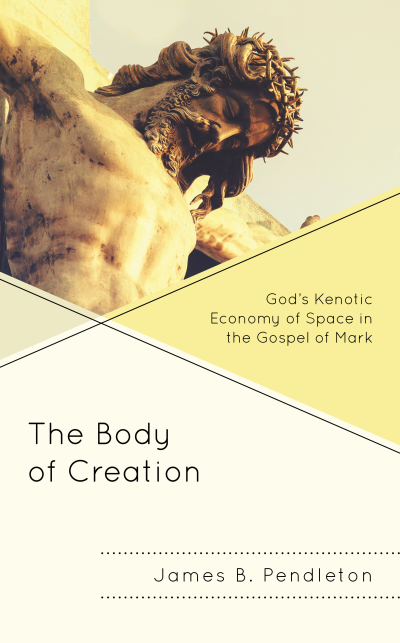
The Body of Creation
God’s Kenotic Economy of Space in the Gospel of Mark
Authors:
Publisher:
2020
Summary
In the modern period, space has predominately been conceived of as a mere setting for human action, ontologically separate from the body. In Markan studies, the result has been the multiplication of textual geographies that hide the spatiality of Jesus’s narrativized and, thus, living body. Rather than representing Jesus’s body as replicating the spatial configurations of dominant scribal cartographic practice (including imperial practice), James B. Pendleton shows that Mark portrays Jesus’s body as a living production of space that troubles dominant maps. Against readings of Mark that argue that Jesus is either an imperial or an anti-imperial figure, Pendleton argues that Mark presents Jesus’s body, and thus his spatiality, as both inside (as an insider) and outside (as an outsider) simultaneously, in what has more commonly been theorized recently as third spatiality, or thirdspace. Rather than an imperial or anti-imperial economy of spatial production, Pendleton argues, Mark presents Jesus’s body within a both-and and more economy that is kenotic, revealing God’s own royal yet “emptying” body.
Keywords
Search publication
Bibliographic data
Edition
1/2020
Copyright Year
2020
ISBN-Print
978-1-9787-1095-5
ISBN-Online
978-1-9787-1096-2
Publisher
Lexington, Lanham
Language
English
Pages
129
Product Type
Monograph
Table of contents
ChapterPages
Contents No access
Acknowledgments No access
Introduction No access Pages 1 - 8
1 Space and the Gospel of Mark No access Pages 9 - 22
2 Theorizing Space as an Embodied Production No access Pages 23 - 46
3 The Temple in Galilee? No access Pages 47 - 68
4 No Space for Figs No access Pages 69 - 90
5 Behind the Veil? No access Pages 91 - 114
Conclusion No access Pages 115 - 118
Bibliography No access Pages 119 - 126
Index No access Pages 127 - 128
About the Author No access Pages 129 - 129
Similar publications
from the topics "Religion und Theologie allgemein"