, to see if you have full access to this publication.
Monograph No access
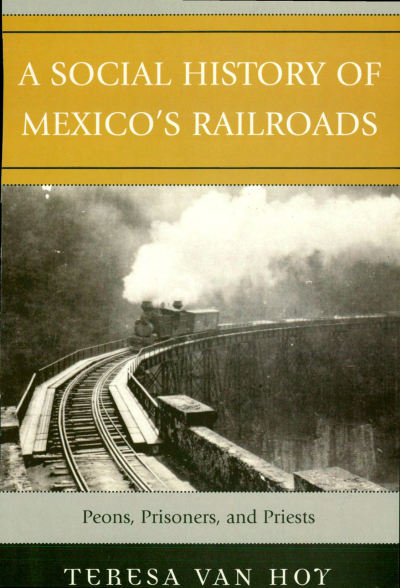
A Social History of Mexico's Railroads
Peons, Prisoners, and Priests
Authors:
Publisher:
2008
Summary
Largely absent from our history books is the social history of railroad development in nineteenth-century Mexico, which promoted rapid economic growth that greatly benefited elites but also heavily impacted rural and provincial Mexican residents in communities traversed by the rails. In this beautifully written and original book, Teresa Van Hoy connects foreign investment in Mexico, largely in railroad development, with its effects on the people living in the isthmus of Tehuantepec, Mexico's region of greatest ethnic diversity. Students will be drawn to a fascinating cast of characters, as muleteers, artisans, hacienda peons, convict laborers, dockworkers, priests, and the rural police force (rurales) join railroad regulars in this rich social history. New empirical evidence, some drawn from two private collections, elaborates on the huge informal economy that supported railroad development. Railroad officials sought to gain access to local resources such as land, water, construction materials, labor, customer patronage, and political favors. Residents, in turn, maneuvered to maximize their gains from the wages, contracts, free passes, surplus materials, and services (including piped water) controlled by the railroad. Those areas of Mexico suffering poverty and isolation attracted public investment and infrastructure. A Social History of Mexico's Railroads is the dynamic story of the people and times that were changed by the railroads and is sure to engage students and general readers alike.
Keywords
Search publication
Bibliographic data
Copyright Year
2008
ISBN-Print
978-0-7425-5328-6
ISBN-Online
978-1-4617-0031-9
Publisher
Rowman & Littlefield, Lanham
Language
English
Pages
240
Product Type
Monograph
Table of contents
ChapterPages
Dedication No access
Contents No access
List of Illustrations No access
Preface No access
Acknowledgments No access
Introduction No access
Abbreviations No access
1 Twelve Hours by Train rath er than Twelve Days on foot: Independence and Isolation No access
2 Thatched Huts, Cactus Fences, and Crops Unplanted :Railroads and Land—Southern Mexico No access
3 From Convicts and Conscripts to Payroll Crews: Labor on the Railroads—Unpaid to Well Paid No access
4 Wood, Lime, and Crushed Rock: Labor on the Railroads-Beyond the Payroll No access
5 Pilgrimages, Mangos, and Medicine : Railroad Services—Formal and Informal No access
6 Inspectors, Inaugurations, and Public Bulletins : Authoritarian Policies—Mellowed and Manipulated. No access