, to see if you have full access to this publication.
Monograph No access
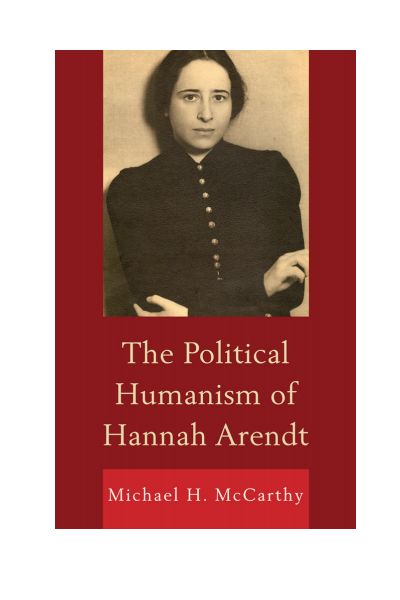
The Political Humanism of Hannah Arendt
Authors:
Publisher:
2012
Summary
At the end of the Second World War when the horror of the holocaust became known, Hannah Arendt committed herself to a work of remembrance and reflection. Intellectual integrity demanded that we comprehend and articulate the genesis and meaning of totalitarian terror. What earlier spiritual and moral collapse had made totalitarian regimes possible? What was the basis of their evident mass appeal? To what cultural resources and political institutions and traditions could we turn to prevent their recurrence? After years of profound study, Arendt concluded that the deepest crisis of the modern world was political and that the enduring appeal of political mass movements demonstrated how profound that crisis had become.
For Arendt the modern political crisis is also a crisis of humanism. The radical totalitarian experiment was rooted in two distorted images of the human being. The agents of terror believed in the limitless power generated by strategic organization, a power exercised without restraint and justified by appeal to historical necessity. The victims of terror, by contrast, were systematically dehumanized by the ruling ideology, and then brutally deprived of their legal rights and their moral and existential dignity. Arendt’s political humanism directly challenges both of these distorted images, the first because it dangerously inflates human power, the second because it deliberately subverts human freedom and agency.
This book offers a dialectical account of the political crisis that Arendt identified and shows why her interpretation of that crisis is especially relevant today. The author also provides detailed analysis and appraisal of Arendt’s political humanism, the revisionary anthropology she based on the politically engaged republican citizen. Finally, the work distinguishes the merits from the limitations of Arendt’s genealogical critique of “our tradition of political thought”, showing that she tended to be right in what she affirmed and wrong in what she excluded or omitted.
Keywords
Search publication
Bibliographic data
Edition
1/2012
Copyright Year
2012
ISBN-Print
978-0-7391-7719-8
ISBN-Online
978-0-7391-7720-4
Publisher
Lexington, Lanham
Language
English
Pages
311
Product Type
Monograph
Table of contents
ChapterPages
Contents No access
Preface No access
Notes No access
Totalitarianism as a Limit Situation No access
The Burden of Our Time No access
The Sources of Our Political Crisis No access
Notes No access
The Spirit of Arendtian Politics No access
The Cultural Convictions of Modernity No access
The Victory of the Animal Laborans No access
Notes No access
Overcoming Tradition No access
Greek Political Philosophy No access
The Platonic Inheritance No access
Aristotle’s Practical Philosophy No access
Poiesis and Praxis No access
Ruling and Being Ruled No access
The Best Way to Live No access
Notes No access
Progress and Disillusion No access
Dialectical Materialism No access
The Critique of Capitalism No access
The Arendtian Critique of Marx No access
The Glorification of Labor and the Naturalization of Man No access
Violence as the Essence of Politics No access
The Science of Historical Necessity No access
Marxism As Ideology: An Arendtian Critique No access
The Merits and Limitations of Marxism No access
Notes No access
PART I No access
The Critical Appropriation of Tradition No access
The Old and the New No access
The Discontents of Liberal Democracy No access
A Crisis of Legitimacy No access
The Promise and Perils of Globalization No access
American Democracy Revisited No access
Toward a New Progressive Agenda No access
E Pluribus Unum: The Challenge of Contemporary Pluralism No access
PART II No access
The Critique of Liberalism No access
Public Liberty No access
Participation and Representation No access
The Primacy of Politics Over Economics No access
The Social Question Revisited: Distributive Justice and Political Equality No access
The Renewal of Civil Society No access
The Common World and the Common Good No access
Healing the Rift Between Thought and Action: The Importance of Practical Wisdom No access