, to see if you have full access to this publication.
Monograph No access
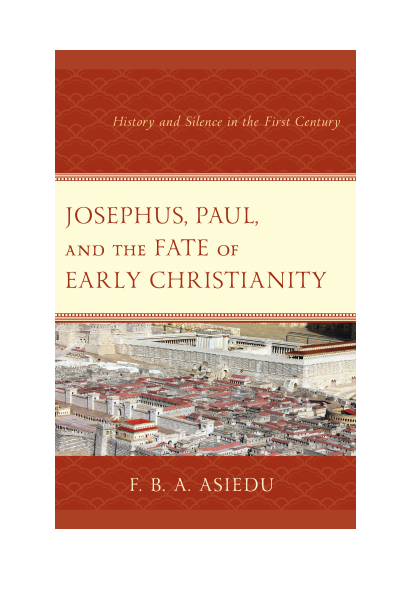
Josephus, Paul, and the Fate of Early Christianity
History and Silence in the First Century
Authors:
Publisher:
2019
Summary
Flavius Josephus, the priest from Jerusalem who was affiliated with the Pharisees, is our most important source for Jewish life in the first century. His notice about the death of James the brother of Jesus suggests that Josephus knew about the followers of Jesus in Jerusalem and in Judaea. In Rome, where he lived for the remainder of his life after the Jewish War, a group of Christians appear to have flourished, if 1 Clement is any indication. Josephus, however, says extremely little about the Christians in Judaea and nothing about those in Rome. He also does not reference Paul the apostle, a former Pharisee, who was a contemporary of Josephus’s father in Jerusalem, even though, according to Acts, Paul and his activities were known to two successive Roman governors (procurators) of Judaea, Marcus Antonius Felix and Porcius Festus, and to King Herod Agrippa II and his sisters Berenice and Drusilla. The knowledge of the Herodians, in particular, puts Josephus’s silence about Paul in an interesting light, suggesting that it may have been deliberate.
In addition, Josephus’s writings bear very little witness to other contemporaries in Rome, so much so that if we were dependent on Josephus alone we might conclude that many of those historical characters either did not exist or had little or no impact in the first century. Asiedu comments on the state of life in Rome during the reign of the Emperor Domitian and how both Josephus and the Christians who produced 1 Clement coped with the regime as other contemporaries, among whom he considers Martial, Tacitus, Pliny the Younger, and others, did. He argues that most of Josephus’s contemporaries practiced different kinds of silences in bearing witness to the world around them. Consequently, the absence of references to Jews or Christians in Roman writers of the last three decades of the first century, including Josephus, should not be taken as proof of their non-existence in Flavian Rome.
Keywords
Search publication
Bibliographic data
Edition
1/2019
Copyright Year
2019
ISBN-Print
978-1-9787-0132-8
ISBN-Online
978-1-9787-0133-5
Publisher
Lexington, Lanham
Language
English
Pages
351
Product Type
Monograph
Table of contents
ChapterPages
Contents No access
Acknowledgments No access
A Note on Translations No access
Abbreviations No access
Chronology No access
Introduction No access Pages 1 - 20
1 Josephus, Paul, and the Early Christians No access Pages 21 - 64
2 Reading Josephus’s Silences No access Pages 65 - 128
3 Josephus and Martial in Flavian Rome No access Pages 129 - 196
4 Martial, Tacitus, Pliny, and Friends No access Pages 197 - 262
5 Paul, the Jewish Past, and the Roman Contexts of First Clement No access Pages 263 - 318
Epilogue No access Pages 319 - 324
Bibliography No access Pages 325 - 340
Index No access Pages 341 - 350
About the Author No access Pages 351 - 351
Similar publications
from the topics "Religion und Theologie allgemein"