, to see if you have full access to this publication.
Monograph No access
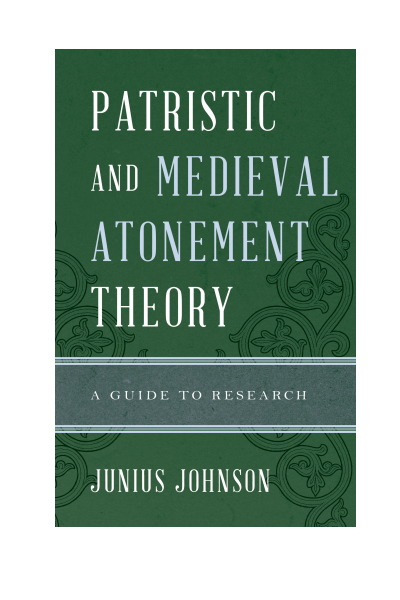
Patristic and Medieval Atonement Theory
A Guide to Research
Authors:
Publisher:
2015
Summary
The notion of atonement, a process by which humans are made right before God, is central to the logic of Christian theology. In spite of this, major thinkers in the Christian traditions have held vastly different understandings of both the way atonement works and what it means. These differing accounts have become intellectual traditions which continue to influence both academic theology and spiritual practice today. In spite of the strong dependence of much contemporary thought on early ideas, linguistic and cultural barriers often preclude serious study of the original materials.
Patristic and Medieval Atonement Theory takes a close look at the doctrines that depend on and influence views of atonement in order to make clear what place atonement occupies within the larger system of Christian theology. Junius Johnson also considers key concepts and tensions within the doctrine of atonement itself, which may be emphasized or glossed over to create the shape of particular doctrines. Johnson's guide briefly discusses major figures in the development of Christian doctrines of atonement to the end of the Middle Ages. Johnson then turns to the major primary and secondary sources and provides an orientation to the rich literature existing on this topic.
The attention given to the anatomy of the concepts involved, the introduction to the ideas of major thinkers, and the survey of available literature makes this an essential guide for students and scholars of Christian theology of any period, as well as those who research the Middle Ages but are not specialists in theology.
Search publication
Bibliographic data
Edition
1/2015
Copyright Year
2015
ISBN-Print
978-0-8108-8434-2
ISBN-Online
978-0-8108-8435-9
Publisher
Rowman & Littlefield, Lanham
Language
English
Pages
213
Product Type
Monograph
Table of contents
ChapterPages
Contents No access
Introduction No access Pages 1 - 4
A. Defining the Terms: What Is Meant by Atonement? No access
i. Atonement Claims Generated by Reflection on the Nature of Human Sin No access
ii. Atonement Claims Generated by Reflection on the Nature of Christ No access
iii. Atonement Claims Generated by Reflection on the Nature of God No access
iv. Claims Generated Internal to the Doctrine of Atonement No access
v. The Tension within the Doctrine No access
A. Conceptual Continuity and Discontinuity between Patristic and Medieval Thought No access
i. Doctrine of God No access
ii. Freedom No access
iii. A Word about Sacrifice No access
C. Scriptural Interpretation No access
i. Genetic Models of Likeness No access
ii. Participatory Models of Likeness No access
iii. Temptation No access
iv. The Attractiveness of Likeness No access
i. Divinity and the One Savior No access
ii. Superexcellent Human Nature No access
iii. The Attractiveness of Unlikeness No access
4 Athanasius (c. 296–373) No access
5 Gregory Nazianzen (329–390) No access
6 Gregory of Nyssa (335–395) No access
7 Augustine of Hippo (354–430) No access
8 Anselm of Canterbury (c. 1033–1109) No access
9 Peter Abelard (1079–1142) No access
10 Bonaventure (1221–1274) No access
11 Thomas Aquinas (1225–1274) No access
Notes No access
13 Patristic Period: Primary Sources No access
A. Athanasius No access
B. Gregory Nazianzen No access
C. Gregory of Nyssa No access
D. Augustine No access
E. Select Patristic Authors Not Treated in This Text No access
F. General Patristic Sources No access
15 Medieval Period: Primary Sources No access
A. Anselm of Canterbury No access
B. Peter Abelard No access
C. Bonaventure No access
D. Thomas Aquinas No access
E. Julian of Norwich No access
F. General Medieval Sources No access
17 Secondary Sources Common to the Patristic and Medieval Periods No access
Name Index No access Pages 205 - 208
Subject Index No access Pages 209 - 212
About the Author No access Pages 213 - 213
Similar publications
from the topics "Religion und Theologie allgemein"