, to see if you have full access to this publication.
Monograph No access
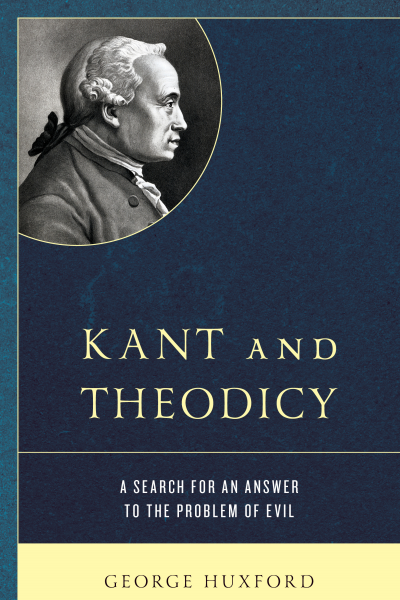
Kant and Theodicy
A Search for an Answer to the Problem of Evil
Authors:
Publisher:
2020
Summary
In Kant and Theodicy: A Search for an Answer to the Problem of Evil, George Huxford proves that Kant’s engagement with theodicy was career-long and not confined to his short 1791 treatise that dealt explicitly with the subject. Huxford treats Kant’s developing thought on theodicy in three periods: pre-Critical (exploration), early-Critical (transition), and late-Critical (conclusion). Illustrating the advantage of approaching Kant through this framework, Huxford argues that Kant’s stance developed through his career into his own unique authentic theodicy; Kant rejected philosophical theodicies based on theoretical/speculative reason but advanced authentic theodicy grounded in practical reason, finding a middle ground between philosophical theodicy and fideism, both of which he rejected. Nevertheless, Huxford concludes that Kant’s authentic theodicy fails because it fails to meet his own definition of a theodicy.
Search publication
Bibliographic data
Edition
1/2020
Copyright Year
2020
ISBN-Print
978-1-4985-9723-4
ISBN-Online
978-1-4985-9724-1
Publisher
Lexington, Lanham
Language
English
Pages
150
Product Type
Monograph
Table of contents
ChapterPages
Contents No access
Introduction No access
Chapter 1 Kant and the Optimism of Leibniz No access
Chapter 2 The Origin and Nature of Evil No access
Chapter 3 Is Philosophical Theodicy Possible for Kant? No access
Chapter 4 Setting the Scene No access
Chapter 5 Aspects of Theodicy No access
Chapter 6 Pulling the Strands Together No access
Chapter 7 The Failure of Philosophical Theodicies No access
Chapter 8 The Taxonomy of Evil Revisited No access