, to see if you have full access to this publication.
Monograph No access
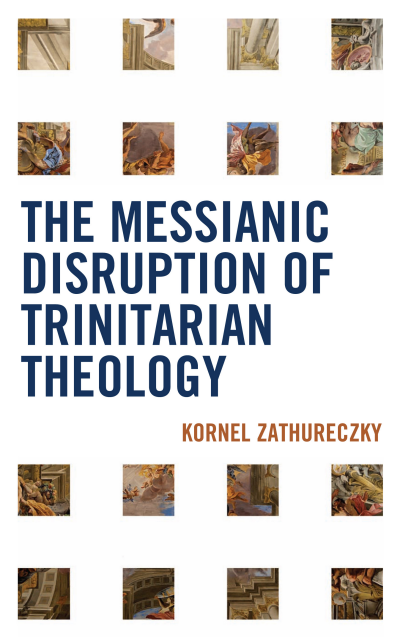
The Messianic Disruption of Trinitarian Theology
Authors:
Publisher:
2009
Summary
The unsettling context of late modernity, a terrain of an infinite fragmentation of life, poses a challenge to Christianity to rearticulate its defining doctrine of the Trinity. Christianity's initial messianic weakness_in that its canonical writings attest to a universal message of redemption for the victims of Empire_was subverted into the strong theology of the Empire. This book demonstrates that Trinitarian discourse was profoundly implicated in this development as it essentially absorbed and took the bite out of the messianic language of the early Christian movement. Zathureczky proposes a retrieval of the messianic discourse of Christianity by way of recapturing its redemptive weakness. Relying on an elective affinity between Walter Benjamin's messianism and JYrgen Moltmann Trinitarianism, he attempts to recapture the 'weakness' and fragility of the language of the initial messianic impulse of the Christian community. The resulting 'weak' Trinitarianism retains the basic character of Christianity as a Trinitarian faith, but now Trinitarian discourse about God is simultaneously messianic discourse, a language that is attuned to give voice to the damaged lives and alienating conditions of our contemporary context.
Search publication
Bibliographic data
Edition
1/2009
Copyright Year
2009
ISBN-Print
978-0-7391-3150-3
ISBN-Online
978-0-7391-3152-7
Publisher
Lexington, Lanham
Language
English
Pages
182
Product Type
Monograph
Table of contents
ChapterPages
Contents No access
Introduction No access
Chapter 01. The Loss of the Messianic No access Pages 1 - 26
Chapter 02. Messianic Possibilities No access Pages 27 - 44
Chapter 03. Messianic Epistemology No access Pages 45 - 74
Chapter 04. Messianic Pneumatology No access Pages 75 - 96
Chapter 05. Messianic History No access Pages 97 - 120
Chapter 06. Messianic Suffering No access Pages 121 - 138
Chapter 07. Messianic Optics: Elective Affinity between the Messianisms of Walter Benjamin and Jürgen Moltmann No access Pages 139 - 154
Chapter 08. Trinitarian Discourse: Doxology Born of Remembrance No access Pages 155 - 164
Bibliography No access Pages 165 - 174
Index No access Pages 175 - 180
About the Author No access Pages 181 - 182
Similar publications
from the topics "Religion und Theologie allgemein"