, to see if you have full access to this publication.
Monograph No access
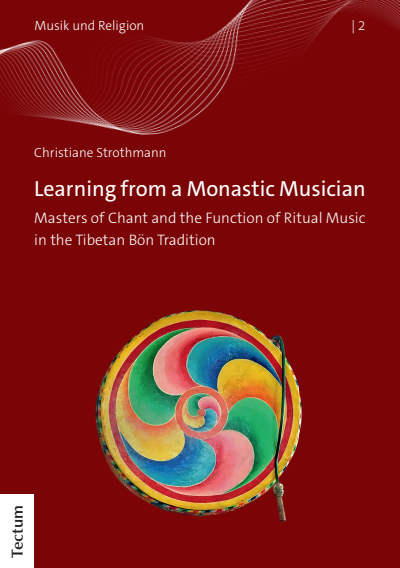
Learning from a Monastic Musician
Masters of Chant and the Function of Ritual Music in the Tibetan Bön Tradition- Authors:
- Series:
- Musik und Religion, Volume 2
- Publisher:
- 2024
Summary
This book not only offers valuable ethnomusicological insights into the ritual music of the Tibetan Yungdrung Bön tradition. At the same time, it is an extraordinary case study in which Christiane Strothmann captivatingly describes her many years of collaboration with the Tibetan monastic musician and scholar Geshé Dawa Namgyal Kharnatsang in the Indian exile monastery of Menri. The book offers insights into the workings of Bön ritual melodies and includes culturally sensitive, personal accounts of Strothmann's journey to discover her method of 'reading ritual', which developed from her research partner's invitation to 'just look at it!'.
Keywords
Search publication
Bibliographic data
- Copyright Year
- 2024
- ISBN-Print
- 978-3-8288-4961-7
- ISBN-Online
- 978-3-8288-5100-9
- Publisher
- Tectum, Baden-Baden
- Series
- Musik und Religion
- Volume
- 2
- Language
- English
- Pages
- 592
- Product Type
- Monograph
Table of contents
ChapterPages
- Titelei/Inhaltsverzeichnis No access Pages I - XXXII
- Introduction No access Pages 1 - 2
- 1.1 Background of research and methodological consequences No access
- 1.2.1 Ethnomusicology of the individual No access
- 1.2.2 Doctrinal study as an acquisition of skills No access
- 1.2.3 Dense participation No access
- 1.3 Three methods of teaching No access
- 1.4 Structure of the work No access
- 1.5 References to the main studies on the ritual music of Tibetan Buddhism No access
- 1.6 Language and interpreters No access
- 1.7.1 Ritual music, rites, and tantric practices No access
- 1.7.2 On the term “Westerner” No access
- 1.7.3 Transcription and transliteration of Tibetan terms and names No access
- 1.8 Audio examples and color prints No access
- 2.1.1 Dolanji No access
- 2.1.2 Housing: The Menri guesthouse No access
- 2.1.3 The medical college No access
- 2.1.4.1 “Doing kora” in Menri No access
- 2.1.4.2 Weekend tourism and short religious tri No access
- 2.1.5.1 Providing basic and higher education in Bön culture and its spiritual tradition No access
- 2.1.5.2 Preserving the heritage of the Bön tradition: Old and new ways No access
- 2.2.1 Yeru Whensaka dru Monastery No access
- 2.2.2 Nyammé Sherab Gyaltsen and the foundation of Menri Monastery No access
- 2.2.3 Nyammé Sherab Gyaltsen and Tsongkapa No access
- 2.2.4 The yidam Nyammé Sherab Gyaltsen No access
- 2.2.5 The founding of Yungdrung Ling No access
- 2.2.6 The reconstruction of Menri Monastery in Indian exile No access
- 2.2.7 The 33rd Menri Abbot Lungtok Tenpé Nyima and the unification of the lineage No access
- 3.1 Tsok-chen umdze No access
- 3.2 Master of cham dance No access
- 3.3 Geshé No access
- 3.4 Teacher in the medical college No access
- Chapter 4 Other dialogue partners No access Pages 75 - 80
- 5.1 Oral versus written instructions No access
- 5.2 Dealing with flexible forms No access
- 5.3.1.1 From speech to chant No access
- 5.3.1.2 Facebook as a memory aid No access
- 5.3.1.3 Transcribing the ké No access
- 5.3.1.4 The micro-melodic figures: Fixed in gestalt but flexible in place? No access
- 5.3.2.1 Lama strophe: The “mandala” chag-gya No access
- 5.3.2.2 Yidam strophe: The “yidam” chag-gya No access
- 5.3.2.3 Khandro strophe: The “khandro” chag-gya No access
- 5.3.2.4 The framing chag-gyas No access
- 5.3.3.1 Chag-gyas and ké: Parallel tracks instead of fixed cues No access
- 5.3.3.2 Relation of chag-gyas and mental activities No access
- 5.3.4 The aesthetic principle of “performing together as individuals” No access
- 5.3.5.1 Body, speech, and mind in the “gong-chö nam sum” practice No access
- 5.3.5.2.1 The level of sutra No access
- 5.3.5.2.2 The level of tantra No access
- 5.3.5.2.3 The level of dzogchen No access
- 5.3.5.3 Fourth level: The preliminary practices (ngön-dro) No access
- 5.3.5.4 The “outer,” “inner,” and “secret” aspect in the “gong-chö nam sum” practice No access
- 5.3.5.5.1 Lama No access
- 5.3.5.5.2 Yidam No access
- 5.3.5.5.3 Khandro No access
- 5.4.1.1 Practicing damaru and sil-nyen No access
- 5.4.1.2.1 A place for the benefit of the lay community No access
- 5.4.1.2.2 A place to memorize the scriptures No access
- 5.4.1.2.3 A place to practice monastic instruments No access
- 5.4.1.2.4 My personal time and place to practice No access
- 5.4.1.3 Kharnatsang’s instructions for practicing the damaru No access
- 5.4.1.4.1 Notating the damaru No access
- 5.4.1.4.2 Three compositional figures No access
- 5.4.1.4.3 The sil-nyen patterns No access
- 5.4.1.4.4 Combining sil-nyen and damaru No access
- 5.4.2.1 Scales do not matter No access
- 5.4.2.2 Combining ké, damaru, and sil-nyen No access
- 5.4.2.3.1 Generating compassion No access
- 5.4.2.3.2 Compassion and emptiness: Two aspects of the enlightened mind No access
- 5.4.2.4 Teaching concepts in an experiential way No access
- 6.1 Teaching through withholding: The exclusion of the frame drum No access
- 6.2.1.1 Forms and fixations No access
- 6.2.1.2 Membranes No access
- 6.2.1.3 Sticks No access
- 6.2.1.4 Colors and paintings No access
- 6.2.1.5 Beating point No access
- 6.2.1.6 Weight of the stick and physical effort to play No access
- 6.2.2.1 The umdze’s desk No access
- 6.2.2.2 Functions of the umdze in the big rituals No access
- 6.2.2.3.1 Drumming as sonic conducting No access
- 6.2.2.3.2 Drumming that requires visual conducting No access
- 6.2.2.4 Notation of drumbeats No access
- 6.2.3.1 The rite of the protectors of Bön and Menri Monastery No access
- 6.2.3.2.1.1 Shen-dön without periodic pitch pattern No access
- 6.2.3.2.1.2 Shen-dön with periodic pitch patterns No access
- 6.2.3.2.2 Other types of drumming during the protector ritual No access
- 6.2.3.3 Relation of drummer and drum sound No access
- 6.2.4.1 The relic house No access
- 6.2.4.2 The temple of the medical college No access
- 6.2.4.3 Other rooms No access
- 6.3.1 On not playing the frame drum No access
- 6.3.2 The ritual drum as a symbol for authenticity No access
- 6.3.3 Confirmation of drumming as a derivation from speech No access
- 6.3.4 The four “modes of activity” (lé zhi) No access
- 6.3.5.1 The text: “History of the Drum” No access
- 6.4 Interim conclusion Part I No access
- 7.1.1 Nonmusical meaning of the word ké No access
- 7.1.2 Ambiguity of the professional term ké No access
- 7.1.3 First mention of the phenomenon by Ricardo Canzio No access
- 7.1.4 The ké-kyi-jé-tra – manuscripts comprising collections of ké No access
- 7.1.5 Notation in the manuscripts No access
- 7.1.6 The oral sources No access
- 7.1.7 Freedom of interpretation No access
- 7.1.8 Notation generated for the purpose of this work No access
- 7.2.1 Ritual text and meter: An example from the “Phurpa” zhung No access
- 7.2.2.1 “Phurpa” ké – 7-syllable version No access
- 7.2.2.2 “Phurpa” ké – 9-syllable version No access
- 7.2.2.3 The “combined model” notation – a native method for studying No access
- 7.2.2.4 “Phurpa” ké – versions employing higher numbers of syllables No access
- 7.2.3 Number of lines as an ordering principle for the different ké No access
- 7.2.4.1 “Trowo” ké No access
- 7.2.4.2 “Namgyal” ké No access
- 7.2.4.3 “Zi-ji wang-den” ké No access
- 7.2.5.1 “Rin-dzin zhung” ké and “tones of reference” No access
- 7.2.5.2 “Chö-pé jé-tra”: Complex melody No access
- 7.2.5.3.1 “Bön kyong kang-wé chi” ké – 7-syllable version and 9-syllable version No access
- 7.2.5.3.2 “Bön kyong kang-wé chi” ké – 5-syllable version No access
- 7.2.6.1 Exclamative expressions and mantric formulas No access
- 7.2.6.2 Initial line (“khandro” ké) No access
- 7.2.7.1 “Ser wö nor-bu wö-bar gyi” ké No access
- 7.2.7.2 “A-ma yin yang” ké No access
- 7.2.7.3 “Ten-pa gyé-wé” prayer No access
- 7.2.8.1 “Chog chung” ké and the essential mantras of Bön No access
- 7.2.9.1 “Chab-chog tam-pa”: Kharnatsang (2019) No access
- 7.2.9.2 “Chab-chog tam-pa”: Lungtok Tenpé Nyima and monks (1984) No access
- 7.2.9.3 Possible reason for the differences: performing together as individuals No access
- 7.2.10.1 “Khandro” ké and “yen kam” ké: phrasing and rest No access
- 7.2.10.2 “Du trö” ké: duration of notes No access
- 7.2.10.3.1 “Sang-kang wu yi” ké – opening ké for the “secret” kang-wa to Sipé Gyalmo No access
- 7.2.10.3.2“Zhi-tro yé-shé kang-dzog” ké No access
- 7.2.11.1.1 “Ten-pa gyé-wé” mön-lam: common version No access
- 7.2.11.1.2 “Ten-pa gyé-wé” mön-lam: Kharnatsang’s version No access
- 7.2.11.2.1 4-line prayer to a lama: common version No access
- 7.2.11.2.2 4-line ké to a lama: Kharnatsang’s version No access
- 7.2.11.3.1 “La lü” ké No access
- 7.2.11.3.2 “Zhen dog” ké No access
- 7.2.11.4 Significance of musical irregularities for research on the origins of the ké No access
- 7.3.1.1 Slow and fast recitation having identical ké No access
- 7.3.1.2 Slow and fast recitation being modified according to tempo No access
- 7.3.1.3 Difference between slow and fast recitation: “ma-gyü kyi kang-wa” ké No access
- 7.3.1.4 Differences in perception: “yidam kang-wé chi” ké No access
- 7.3.2.1 Notation of the short chants No access
- 7.3.2.2.1 Melodic units in the gyer-yang chants No access
- 7.3.2.2.2 The chironomic gestures in the gyer-yang No access
- 7.3.2.2.3 Instructions related to bodily and sensual awareness No access
- 7.3.2.2.4.1 The inserted syllables No access
- 7.3.2.2.4.2 The introductory sequences No access
- 7.4 Interim conclusion: Ké as the underlying musical ordering principle of Bön ritual music No access
- 8.1.1 The version for special events No access
- 8.1.2 The shen-dön version No access
- 8.1.3 The version for the monastic routine No access
- 8.1.4 The drum version No access
- 8.1.5 The dzogchen version No access
- 8.1.6 The “dé-chen gyal-po” ké for the non-monastic youth No access
- 8.2.1 “Om ma tri mu yé salé du” (local) No access
- 8.2.2 “Om ma tri mu yé salé du” (Lhakyi’s version) No access
- 8.2.3 The “nor-bu mön-lam” (or “nor-bu”) prayer No access
- 8.3 Interim conclusions: The ké as a set of musical signs? No access
- 8.4.1 Application of ké in the “Trophur” ritual No access
- 8.4.2 Application of ké in the “drib jong ma-rik mün-sel” No access
- 8.4.3 Application of ké in the kang-wa No access
- 9.1 Trying to investigate the construction academically No access
- 9.2.1 Interpreting the arrangement of mandalas and stupas No access
- 9.2.2 Numbers No access
- 9.2.3 Ritual Reading as a method of interpretation No access
- 10.1 Purpose of the Geshé ceremony No access
- 10.2 Placing the ceremony within the monastic calendar No access
- 10.3.1 Consequences for the description of the ceremony No access
- 10.3.2.1 Processions of candidates No access
- 10.3.2.2 Inside the assembly hall No access
- 10.3.2.3 Mantric praise to Künsel Jamma No access
- 10.3.3 Tea offering: “chab-chog tam-pa” (praise to Nyammé Sherab Gyaltsen) No access
- 10.3.4 The chant of the Menri Pönlob No access
- 10.3.5 First task of the Geshés: gyer as a solo performance No access
- 10.4.1 “Da tren ah kar” – praise to Nangtön Dawa Gyaltsen No access
- 10.4.2 The second task: the dam-tug No access
- 10.4.3 Concluding prayer: “jé gyal-wa” 100-syllable mantra, dedication prayer No access
- 10.5.1 Morning session: Reciting a text by heart No access
- 10.6.1 Debate No access
- 10.7.1 Concluding session in the assembly hall No access
- 10.7.2 Congratulating the new Geshés No access
- 10.7.3 Concluding dam-tug and group chanting No access
- 10.7.4 The ablution ritual No access
- 10.7.5 Finale: Enthronement No access
- 10.8 Ritual Reading the tasks of the Geshés: Chanting, pacing, debating No access
- 10.9 Confirmation of the analysis by Kharnatsang No access
- 10.10 Conclusion on Chapter 10 No access
- 11.1 The “Trophur” ritual in the monastic calendar No access
- 11.2 The core of the rite No access
- 11.3.1 The “outer” boundary No access
- 11.3.2 The ritual text as an instruction for visualization No access
- 11.3.3 The “inner” boundary No access
- 11.4.1 “Terrifying chag-gyas” No access
- 11.5.1 Setting the “inner” boundary: dancing No access
- 11.5.2 Phurpa performing terrifying chag-gyas: the “Phurpa” dance No access
- 11.6 Ritual Reading: the body and the level of nang No access
- 12.1 Sipé Gyalmo No access
- 12.2.1 The different ké of the nang-kang No access
- 12.2.2.1 Approaching the meaning of yab-yum No access
- 12.2.3 Three musical recitation pairs No access
- 12.2.4.1 “Par chog” and nang-kang-gi “ngön-mo drug go” No access
- 12.2.4.2 “Ma chig ku sum” and “Sigyal trul-par ché-pé tuk-dam kang” No access
- 12.3.1 Clarifying intertextual (inter-ritual) references of the ké No access
- 12.3.2 Slow and fast recitation as musical metaphor for the yab-yum? No access
- Conclusion No access
- Case study – an encounter of perspectives No access Pages 487 - 504
- Bibliography No access Pages 505 - 520
- List of ké mentioned in this work No access Pages 521 - 528
- Glossary No access Pages 529 - 546
- List of Images No access Pages 547 - 554
- Appendix No access Pages 555 - 592