, to see if you have full access to this publication.
Monograph No access
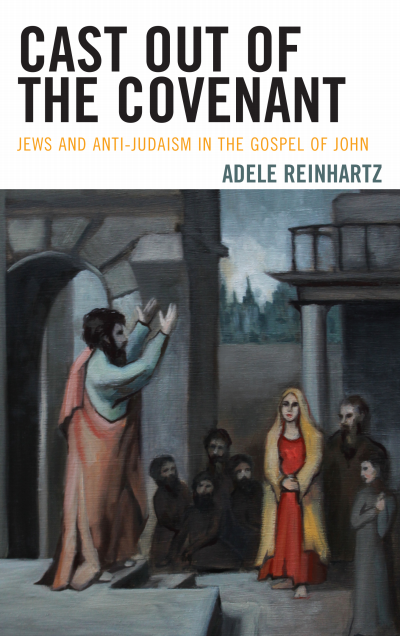
Cast Out of the Covenant
Jews and Anti-Judaism in the Gospel of John
Authors:
Publisher:
2020
Summary
The Gospel of John presents its readers, listeners, and interpreters with a serious problem: how can we reconcile the Gospel’s exalted spirituality and deep knowledge of Judaism with its portrayal of the Jews as the children of the devil (John 8:44) who persecuted Christ and his followers?
One widespread solution to this problem is the so-called “expulsion hypothesis.” According to this view, the Fourth Gospel was addressed to a Jewish group of believers in Christ that had been expelled from the synagogue due to their faith. The anti-Jewish elements express their natural resentment of how they had been treated; the Jewish elements of the Gospel, on the other hand, reflect the Jewishness of this group and also soften the force of the Gospel’s anti-Jewish comments.
In Cast out of the Covenant, this book, Adele Reinhartz presents a detailed critique of the expulsion hypothesis on literary and historical grounds. She argues that, far from softening the Gospel’s anti-Jewishness, the Gospel’s Jewish elements in fact contribute to it. Focusing on the Gospel’s persuasive language and intentions, Reinhartz shows that the Gospel’s anti-Jewishness is evident not only in the Gospel’s hostile comments about the Jews but also in its appropriation of Torah, Temple, and Covenant that were so central to first-century Jewish identity. Through its skillful use of rhetoric, the Gospel attempts to convince its audience that God’s favor had turned away from the Jews to the Gentiles; that there is a deep rift between the synagogue and those who confess Christ as Messiah; and that, in the Gospel’s view, this rift was initiated in Jesus’ own lifetime. The Fourth Gospel, Reinhartz argues, appropriates Jewishness at the same time as it repudiates Jews. In doing so, it also promotes a “parting of the ways” between those who believe that Jesus is the messiah, the Son of God, and those who do not, that is, the Jews. This rhetorical program, she suggests, may have been used to promote outreach or even an organized mission to the Gentiles, following in the footsteps of Paul and his mid-first-century contemporaries.
Keywords
Search publication
Bibliographic data
Edition
1/2020
Copyright Year
2020
ISBN-Print
978-1-9787-0117-5
ISBN-Online
978-1-9787-0118-2
Publisher
Lexington, Lanham
Language
English
Pages
208
Product Type
Monograph
Table of contents
ChapterPages
Contents No access
Preface and Acknowledgments No access
A Note on Terminology No access
Introduction No access
Chapter One. “Ask and you will receive”: The Rhetoric of Desire and Fulfillment No access
Chapter Two. “Love one another”: The Rhetoric of Transformation No access
Chapter Three. “Casting off the withered branch”: The Rhetoric of Expropriation No access
Chapter Four. “The world has hated you”: The Rhetoric of Vituperation No access
Chapter Five. Rhetorical Ioudaioi and Real Jews No access
Chapter Six. “The Jews had already agreed”: J. L. Martyn and the Expulsion Theory No access
Chapter Seven. “We Wish to See Jesus”: John, Alexandra, and the Propulsion Theory No access
Conclusion No access
Bibliography No access Pages 167 - 188
Index of Ancient Sources No access Pages 189 - 198
Index of Modern Authors No access Pages 199 - 200
Subject Index No access Pages 201 - 206
About the Author No access Pages 207 - 208
Similar publications
from the topics "Religion und Theologie allgemein"