, to see if you have full access to this publication.
Monograph No access
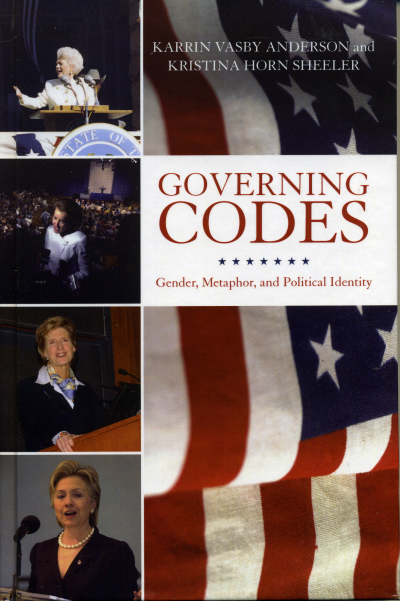
Governing Codes
Gender, Metaphor, and Political Identity
Authors:
|
Publisher:
2005
Summary
Familiar narratives and simplistic stereotypes frame the representation of women in U.S. politics. Pervasive containment rhetorics, such as the distinction between women as mothers and caregivers and men as rational thinkers, create unique hurdles for any woman seeking public office. While these 'governing codes' generally act to constrain female political power, they can also be harnessed as a resource depending on the particular circumstances (e.g., party affiliation, geographic location and personal style). One of these governing codes, the metaphor, is an especially powerful tool in politics today, particularly for women. By examining the political careers of four of the most prominent and influential women in contemporary U.S. politics_Democrats Ann Richards and Hillary Rodham Clinton and Republicans Christine Todd Whitman and Elizabeth Dole_Karrin Vasby Anderson and Kristina Horn Sheeler illustrate how metaphors in public discourse may be both familiar narratives to embrace and boundaries to overturn.
Search publication
Bibliographic data
Edition
1/2005
Copyright Year
2005
ISBN-Print
978-0-7391-1022-5
ISBN-Online
978-0-7391-5570-7
Publisher
Lexington, Lanham
Language
English
Pages
243
Product Type
Monograph
Table of contents
ChapterPages
Contents No access
Acknowledgements No access
Preface No access
Introduction: The Role of Language in Politics No access Pages 1 - 10
1 Gender, Metaphor, and Political Identity No access Pages 11 - 44
2 Ann Richards No access Pages 45 - 80
3 Christine Todd Whitman No access Pages 81 - 116
4. Hillary Rodham Clinton No access Pages 117 - 160
5 Elizabeth Dole No access Pages 161 - 188
Conclusion: Cracking the Governing Codes No access Pages 189 - 200