, to see if you have full access to this publication.
Edited Book No access
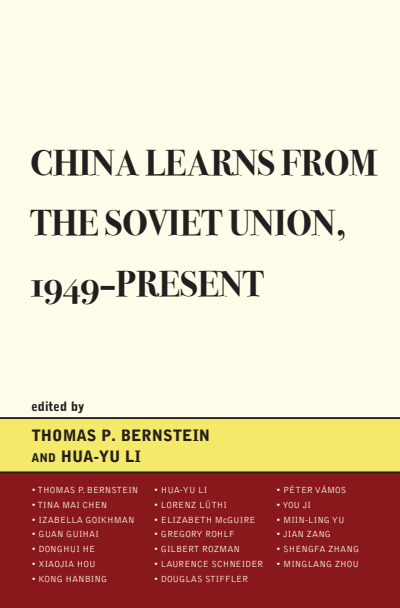
China Learns from the Soviet Union, 1949-Present
Editors:
Publisher:
2010
Summary
It is well known that the Soviet Union strongly influenced China in the early 1950s, since China committed itself both to the Sino-Soviet alliance and to the Soviet model of building socialism. What is less well known is that Chinese proved receptive not only to the Soviet economic model but also to the emulation of the Soviet Union in realms such as those of ideology, education, science, and culture. In this book an international group of scholars examines China's acceptance and ultimate rejection of Soviet models and practices in economic, cultural, social, and other realms. The chapters vividly illustrate the wide-ranging and multi-dimensional nature of Soviet influence, which to this day continues to manifest itself in one critical aspect, namely in China's rejection of liberal political reform.
Keywords
Search publication
Bibliographic data
Edition
1/2010
Copyright Year
2010
ISBN-Print
978-0-7391-4222-6
ISBN-Online
978-0-7391-4224-0
Publisher
Lexington, Lanham
Language
English
Pages
550
Product Type
Edited Book
Table of contents
ChapterPages
Contents No access
Acknowledgments No access
Introduction: The Complexities of Learning from the Soviet Union No access Pages 1 - 24
Chapter 1. Sino-Soviet Relations during the Mao Years, 1949–1969 No access
Chapter 2. The Main Causes for the Return of the Changchun Railway to China and Its Impact on Sino-Soviet Relations No access
Chapter 3. “Only a Handshake but No Embrace”: Sino-Soviet Normalization in the 1980s No access
Chapter 4. Instilling Stalinism in Chinese Party Members: Absorbing Stalin’s Short Course in the 1950s No access
Chapter 5. The Soviet Model and the Breakdown of the Military Alliance No access
Chapter 6. The Transplantation and Entrenchment of the Soviet Economic Model in China No access
Chapter 7. “Get Organized”: The Impact of two Soviet Models on the CCP’s Rural Strategy, 1949–1953 No access
Chapter 8. The Soviet Model and China's State Farms No access
Chapter 9. “Labor Is Glorious”: Model Laborers in the People's Republic of China No access
Chapter 10. The Soviet Impact on “Gender Equality” in China in the 1950s No access
Chapter 11. Soviet-Chinese Academic Interactions in the 1950s: Questioning the “Impact-Response” Approach No access
Chapter 12. “Three Blows of the Shoulder Pole”: Soviet Experts at Chinese People’s University, 1950–1957 No access
Chapter 13. Lysenkoism and the Suppression of Genetics in the PRC, 1949–1956 No access
Chapter 14. Between Revolutions: Chinese Students in Soviet Institutes, 1948–1966 No access
Chapter 15. Coming of Age in the Brave New World: The Changing Reception of How the Steel Was Tempered in the People’s Republic of China No access
Chapter 16. Film and Gender in Sino-Soviet Cultural Exchange, 1949–1969 No access
Chapter 17. China’s Concurrent Debate about the Gorbachev Era No access
Chapter 18. The Fate of the Soviet Model of Multinational State-Building in the People’s Republic of China No access
Chapter 19. The Influence of the Collapse of the Soviet Union on China’s Political Choices No access
Concluding Assessment: The Soviet Impact on Chinese Society No access Pages 517 - 526