, to see if you have full access to this publication.
Monograph No access
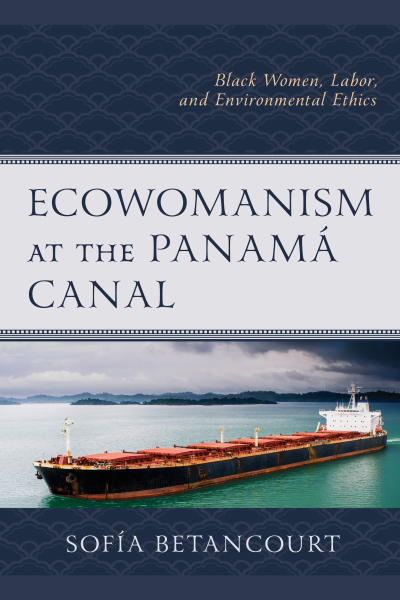
Ecowomanism at the Panamá Canal
Black Women, Labor, and Environmental Ethics
Authors:
Publisher:
2022
Summary
In Ecowomanism at the Panamá Canal: Black Women, Labor, and Environmental Ethics, Sofia Betancourt constructs a transnational ecowomanist ethic that reclaims inherited environmental cultures across multiple sites of displacement. Betancourt argues that women in the African diaspora have a unique understanding of how a moral refusal to compromise their humanity provides the very understanding needed to survive what was once an inconceivable level of environmental devastation. This work is guided by the experiences of West Indian women, imported to Panamá by the United States from across the Caribbean, whose labor supported the building of the Panamá Canal—the so-called silver men and women who faced mud, mosquitoes, and malaria while building a literal pathway to the American empire.
Keywords
Search publication
Bibliographic data
Edition
1/2022
Copyright Year
2022
ISBN-Print
978-1-7936-4138-0
ISBN-Online
978-1-7936-4139-7
Publisher
Lexington, Lanham
Language
English
Pages
150
Product Type
Monograph
Table of contents
ChapterPages
Contents No access
List of Figures No access
List of Figures No access
Acknowledgments No access
Scope of the Project No access
Mother Wit Meets Sabiduría in Intercultural Knowledge Production No access
Emergent Ecowomanist Ethics No access
Methodology No access
Ecoautobiography No access
“Little Trinkles of Water”: Why the Panamá Canal No access
Limitations of the Project No access
Selection of Terms No access
Chapter Summaries No access
Notes No access
Transnational Ecowomanism as a Decolonizing Force No access
Terra Nullius and Ferae Bestiae No access
Tropical Triumphalism and the Jungles of Panamá No access
Sex Work in the Porno-Tropics: “The Morals of All the Women in Camp Are Good” No access
Notes No access
Macwalbax and the Doggerelization of the West Indian Woman in Panamá No access
“Reaping the Sweets”: Inherited Environmental Culture in Their Own Words No access
Notes No access
Ecowomanism, Moral Anthropology, and the Need for New Epistemic Approaches No access
Justice at the Foundations of Ecowomanist Thought No access
Obeah as Diasporic Religious Epistemology No access
A Humanity Worth Holding On To No access
Notes No access
Note No access
Bibliography No access Pages 117 - 124
Appendix A No access Pages 125 - 132
“Carnival Days in Panama”1 No access
“Panama’s Market Place”2 No access
“The Wash Lady”3 No access
“The Banana Lady”4 No access
Notes No access
Index No access Pages 143 - 148
About the Author No access Pages 149 - 150
Similar publications
from the topics "Religion und Theologie allgemein"
Edited Book No access
Jan Hermelink, Alexander Deeg, Michael Domsgen, Kristin Merle, Marcell Saß